

Winter Office Outfits for Work Ideas: The Complete Guide to Dressing for Every Workday Scenario
Winter office outfits for work rarely fail because of the clothes themselves. They fail because the outfit was chosen for the wrong situation. A look that works perfectly for a quiet desk day can feel underdressed in a client meeting, overdressed on casual Friday, or simply uncomfortable during a long day under stiff fluorescent lighting and unpredictable heating. Matching your outfit to the actual scenario ahead is often more important than the specific pieces you pick.
This guide goes beyond a simple gallery of winter office outfits for work. It organizes ideas by real workday situations, from interviews and presentations to hybrid days and office parties, along with details most articles skip entirely like why fabric behavior at a desk matters as much as appearance, and why the same blazer can send completely different signals depending on what surrounds it. Whether your workplace is formal, casual, or somewhere in between, this is the deeper, more practical guide.
Why Winter Office Outfits for Work Are Best Planned by Scenario
Winter office outfits for work benefit from scenario based planning because a single workweek often contains very different demands. Monday might involve a client presentation, Tuesday a quiet focus day, and Friday a relaxed team lunch. A wardrobe built around one generic “work look” struggles to serve all of these gracefully.
This approach matters because it changes how you evaluate every piece you own. Instead of asking whether something is “office appropriate,” you can ask which situations it genuinely suits, and whether it needs support from other pieces to work in more formal or casual settings.
A helpful example: someone who owns only one style of work outfit may find themselves either overdressed for casual days or underdressed for important meetings. Identifying two or three core scenarios in your actual workweek, then building a small set of outfits for each, produces far more confident daily choices.
Because winter also adds practical constraints, from cold commutes to overheated conference rooms, winter office outfits for work benefit from being planned with the day’s specific schedule in mind rather than the weather outside alone.
Don’t Miss: https://trandoras.com/winter-outfits-ideas/
Client Meeting Outfit

A client meeting calls for winter office outfits for work that project competence and polish without appearing stiff. A tailored wool blazer over a fine knit top, paired with structured trousers or a tailored skirt, communicates preparation and respect while remaining comfortable enough to think clearly.
Fabric and fit carry particular weight in this scenario. Crisp, well fitted pieces signal care, while wrinkled or ill fitting clothing can subtly undermine confidence, however capable you are. Choosing fabrics that resist creasing, like wool blends, helps outfits stay sharp through a full day.
A helpful example: someone preparing for an important meeting might choose a navy blazer, a cream fine knit sweater, and charcoal trousers, creating a cohesive, quiet palette that lets their ideas take center stage. This kind of restrained combination rarely distracts and consistently reads as professional.
Bringing a compact, neutral overcoat for arrival, then leaving it at reception, keeps the actual outfit fresh and avoids the rumpled look heavy outerwear can leave behind.
Presentation Day Outfit
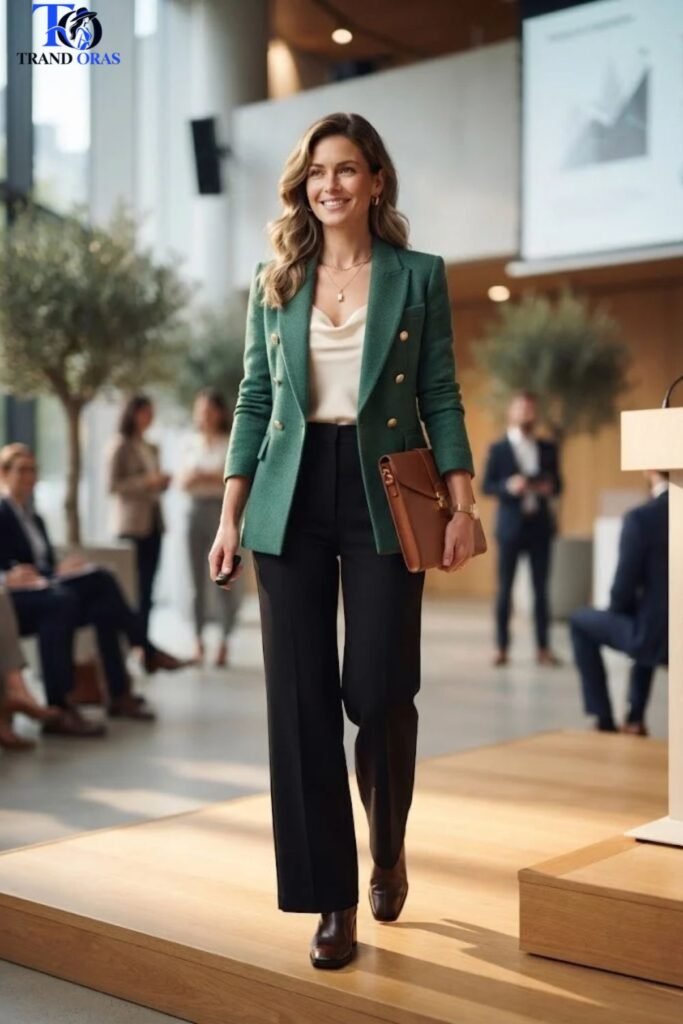
Presenting means being watched, so winter office outfits for work on presentation days should prioritize comfort you can forget about and a silhouette that photographs and projects well. Avoid anything you’ll fidget with, such as loose sleeves that slip or necklines that shift.
Solid, mid tone colors tend to work particularly well because they hold attention without competing with your slides. Very busy patterns can feel distracting on camera or from a distance, while a clean, confident color reads clearly and steadily.
A helpful example: someone giving a presentation might choose a deep green or burgundy knit top under a fitted blazer, adding a subtle pop of color without any fussy details. This helps them look composed and memorable while staying comfortable through a long session.
Checking how the outfit feels when standing, gesturing, and moving before the day itself avoids unpleasant surprises, particularly with tight sleeves or trousers that ride up.
Casual Friday Winter Look
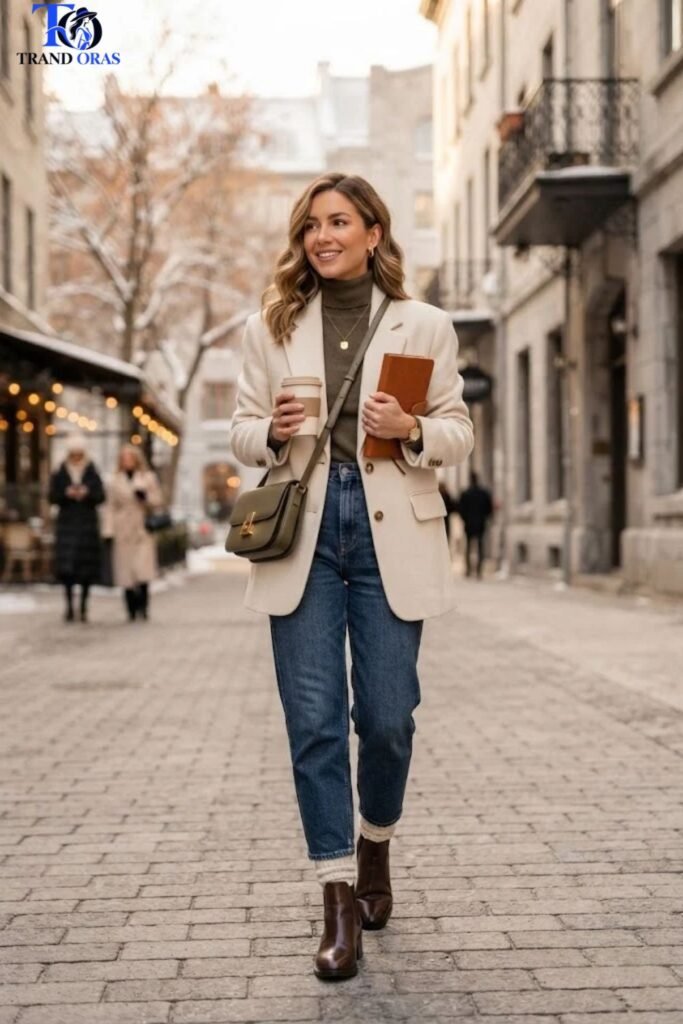
Casual Friday calls for winter office outfits for work that relax the formality while staying clearly professional. Dark, well fitted jeans, a quality sweater, and clean boots or loafers usually strike the right balance in most offices.
The key distinction lies in condition and fit. Casual pieces that look crisp and intentional still read as professional, while worn, faded, or overly baggy items can cross into weekend territory. Elevating casual basics with one structured piece, like a blazer or a neat overshirt, keeps the look grounded.
A helpful example: someone might pair dark denim with a fine merino sweater and a wool overshirt, creating a relaxed but tidy outfit. This approach respects the spirit of casual Friday without sacrificing professionalism.
Checking your office culture and any explicit guidelines about denim is worthwhile, since norms vary considerably between workplaces.
Hybrid Workday Outfit Built for Video Calls
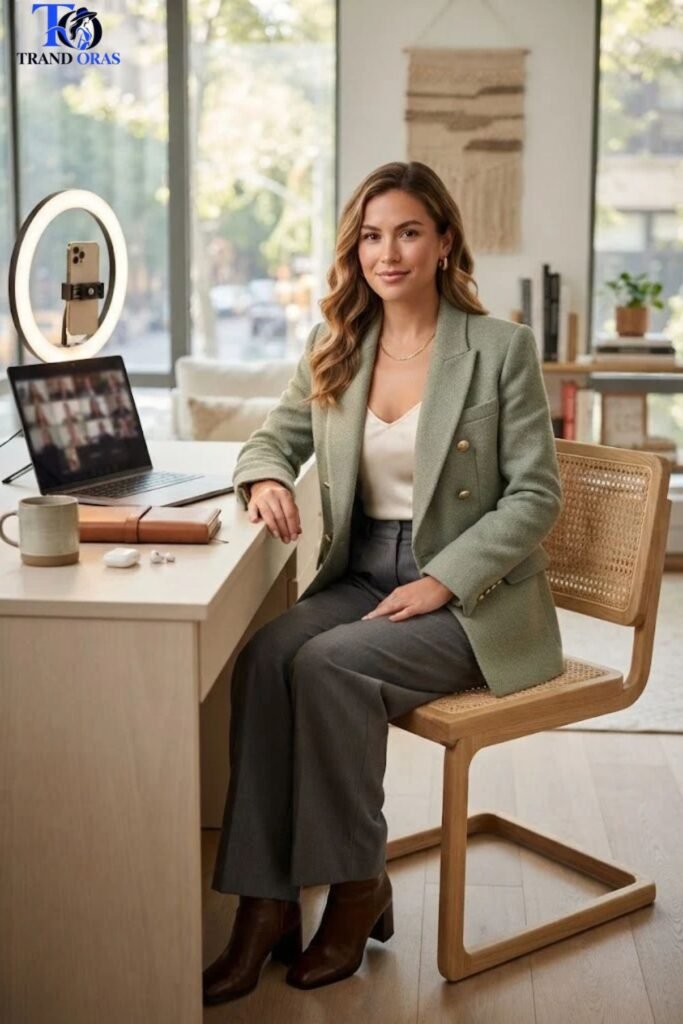
Hybrid schedules have created a new category among winter office outfits for work: outfits that look polished on camera while staying genuinely comfortable. Since video calls mostly show the upper half, a refined top and layer matter most, while lower body comfort can take priority.
Solid colors and simple necklines generally look best on camera, since tiny patterns can shimmer or distort on video. Slightly richer, mid tone shades also tend to read better under typical lighting than very pale or very dark ones.
A helpful example: someone working from home might wear a soft knit sweater with a structured collar and comfortable tailored joggers or soft trousers. This offers presentable video call polish while keeping the lower half relaxed for all day comfort.
Keeping a spare blazer or cardigan near your workspace means a quick layer upgrade is available if an unexpected meeting appears.
Business Travel Outfit
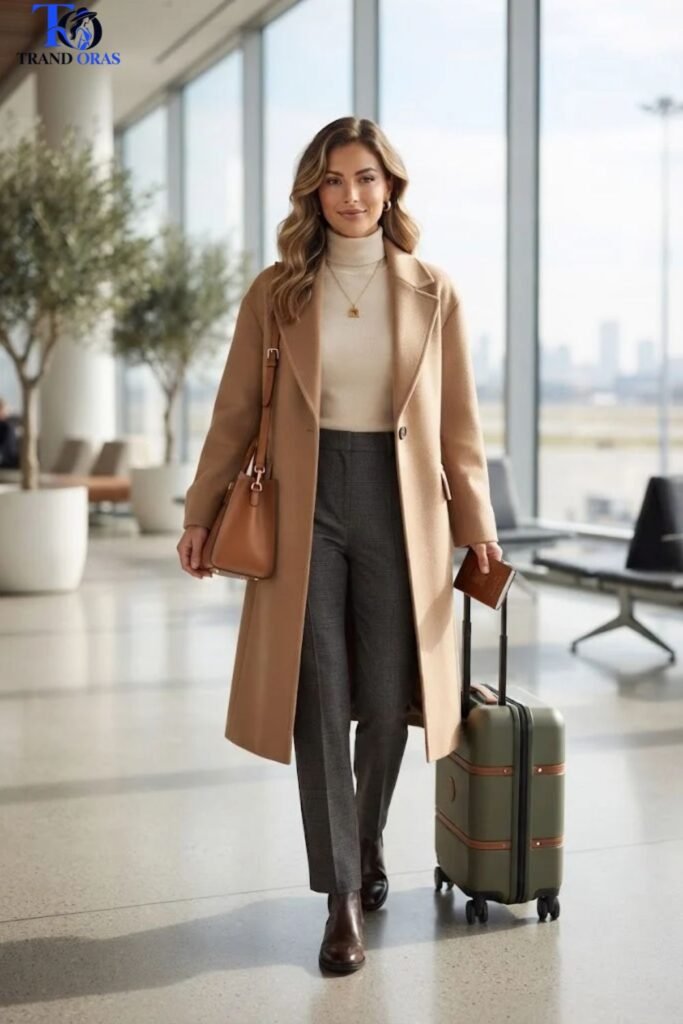
Traveling for work in winter requires outfits that manage long hours, temperature swings, and the possibility of going straight from transit to a meeting. Wrinkle resistant fabrics, breathable layers, and slip on footwear all make the journey easier.
Knit blazers and jersey based pieces work particularly well because they travel without creasing and still look professional. Layering allows adjustment between a cold terminal and an overheated flight.
A helpful example: someone flying to a meeting might wear a wrinkle resistant knit blazer, a fine knit top, and dark stretch trousers with comfortable, polished shoes. This combination looks sharp on arrival and stays comfortable throughout the journey.
Packing a lightweight scarf that doubles as a wrap for cold planes and as an accessory in meetings adds versatility without adding bulk.
Holiday Office Party Look
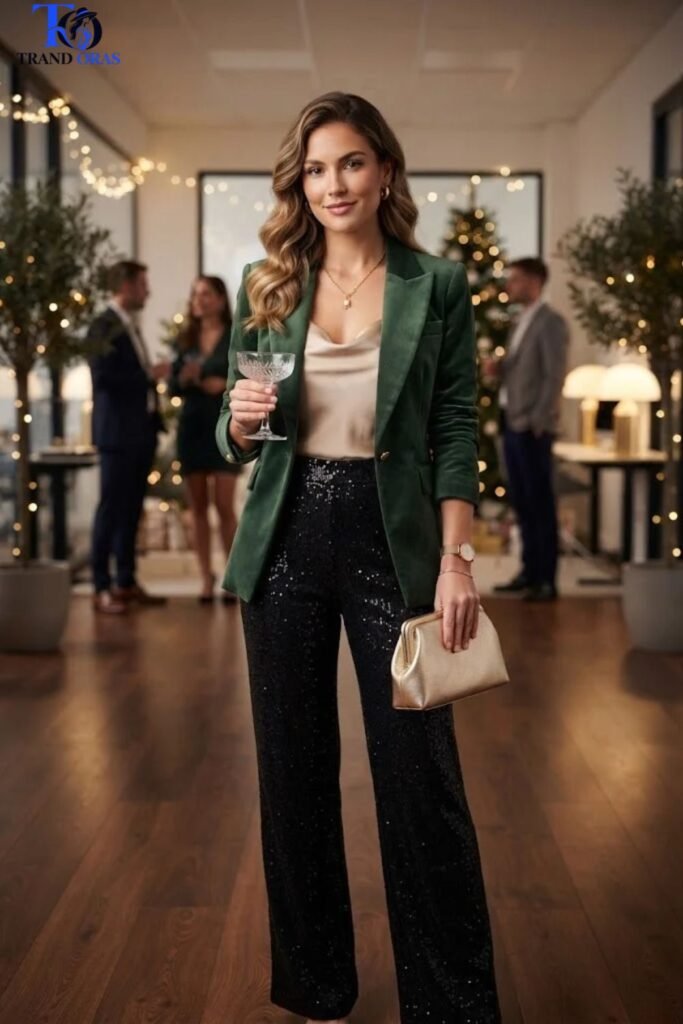
The office holiday party sits between work and celebration, so winter office outfits for work in this context can lean festive while remaining tasteful. Rich fabrics like velvet, satin, or fine knit with subtle shimmer add seasonal warmth without going over the top.
Considering your workplace culture matters here. Some offices welcome sparkle and bold color, while others favor understated elegance. Erring slightly more polished than casual is usually safer, since it’s easier to relax an outfit than to recover from feeling underdressed.
A helpful example: someone might choose a deep jewel toned blouse with tailored trousers and simple metallic jewelry, achieving festive polish without appearing to have dressed for a different event entirely.
Choosing comfortable shoes suited to standing and mingling for hours helps you enjoy the evening rather than watching the clock.
Outfit for a Cold Open Plan Office
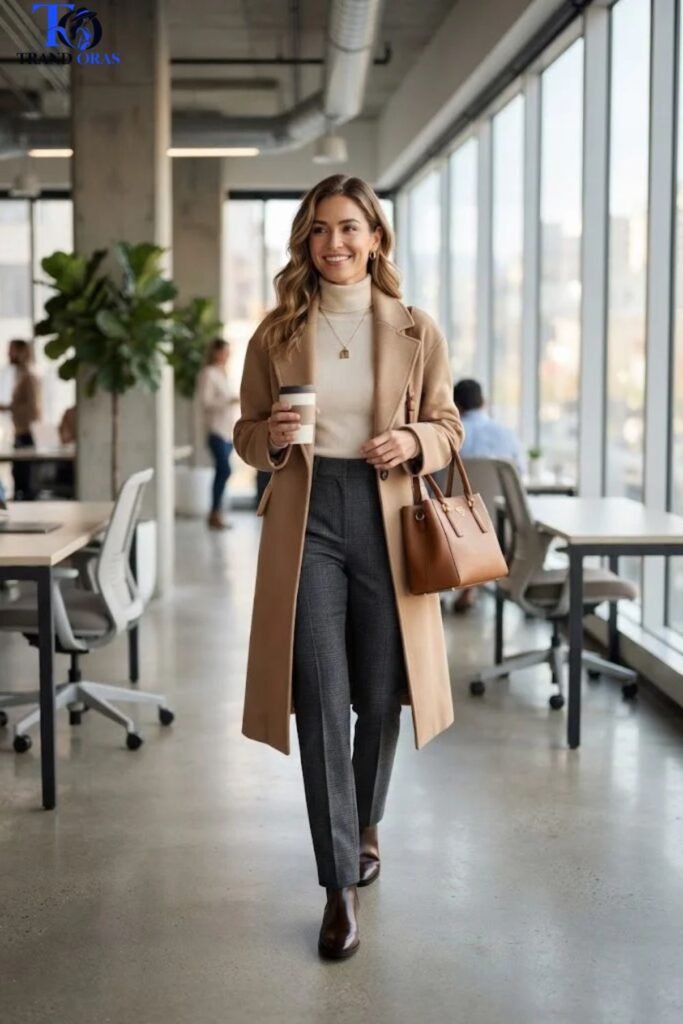
Some offices run consistently cold, and winter office outfits for work in these spaces need built in warmth that doesn’t look bulky. Fine layers, like a thermal base under a knit, provide insulation without visible bulk.
A cardigan or wrap kept at your desk allows flexible adjustment, and warm socks or tights add comfort without changing how the outfit looks. Wool and wool blends retain warmth well even in thin layers.
A helpful example: someone in a chilly office might wear a thin thermal layer under a fitted knit and keep a chunky cardigan draped over their chair for cooler moments. This provides warmth on demand without looking overly bundled.
Fingerless gloves or a small heating pad tucked discreetly under the desk are practical extras many people find genuinely helpful in persistently cold environments.
Interview Outfit for Winter
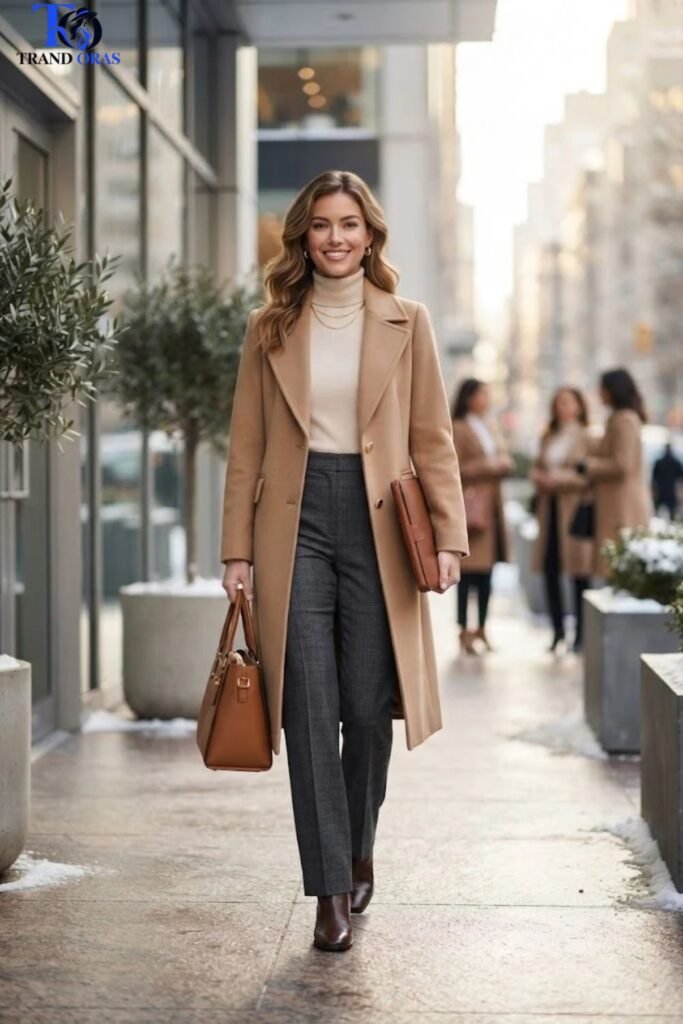
Interviews demand winter office outfits for work that balance polish with practicality, since arriving frozen or flustered by heavy layers can undermine confidence. A tailored, conservative outfit in classic colors remains the safest choice.
Navy, charcoal, black, and soft neutrals generally read as professional across industries, and clean lines matter more than trendiness. Keeping outerwear simple and removing it before entering the interview area avoids awkward fumbling.
A helpful example: someone attending a winter interview might wear a dark tailored suit or coordinated separates, a simple blouse or shirt, and polished shoes, carrying a clean overcoat and leaving it at reception. This projects preparation and composure.
Carrying a small umbrella and having a backup pair of tights or a spare accessory can rescue an outfit from unexpected weather.
Creative Office Outfit

Creative workplaces often welcome more personality, so winter office outfits for work here can include bolder colors, interesting textures, and unexpected combinations. The goal is polished individuality rather than uniform formality.
Mixing a structured piece with a distinctive one, like a tailored blazer with a bold knit or patterned scarf, creates interest without chaos. Consistency in fit and condition keeps the look intentional.
A helpful example: someone might wear a mustard knit under a black blazer with wide leg trousers, adding a distinctive touch that still looks purposeful. This kind of outfit fits creative environments while remaining professional.
Knowing your workplace’s actual expressiveness level helps calibrate how far to push, since even creative offices vary in what feels appropriate.
Post Work Dinner Transition Outfit

Many workdays flow directly into evening plans, and winter office outfits for work that transition smoothly save time and stress. A base outfit with a few quick swaps can move from desk to dinner without a full change.
Swapping flats for heels or boots, adding statement jewelry, or replacing a scarf with a more dressed up option can reshape the mood instantly. A blazer removed or a top layer added changes formality with almost no effort.
A helpful example: someone might wear a silk blouse and tailored trousers to work, then add bold earrings and a sleek coat for dinner. This small shift makes the outfit feel entirely appropriate for both settings.
Keeping a small pouch with a few accessories in your bag makes these transitions quick and easy.
Fabrics That Behave Well at a Desk

Fabric behavior deserves more attention than it usually gets when choosing winter office outfits for work. Materials that look good hanging in a closet can misbehave after hours of sitting, wrinkling, pilling, or clinging with static.
Wool blends, ponte knits, and quality crepe tend to hold their shape and resist wrinkles well. Fine merino resists odor and regulates temperature, while cheap synthetic knits can trap heat and generate static in dry winter air.
A helpful example: someone who wears a stiff, unlined wool skirt may find it rides up or clings after sitting, while a lined or stretch blend version stays comfortable. Trying a garment seated, not just standing, reveals how it will actually behave.
Checking fabric care labels before buying helps avoid pieces that demand frequent dry cleaning and drain both time and budget.
Common Mistakes to Avoid With Winter Office Outfits for Work
One of the most frequent mistakes is choosing outfits without considering the day’s actual schedule, resulting in looks that feel wrong for the situation. Checking your calendar before dressing helps match the outfit to the demands ahead.
Another common error involves relying on a single heavy layer for warmth, which becomes uncomfortable in heated spaces. Thinner layers that can be added or removed offer far more flexibility.
Ignoring how fabrics behave over a full day is another frequent misstep, since pieces that wrinkle, cling, or itch can quietly drain comfort and focus.
Finally, neglecting shoes and outerwear when planning outfits undermines otherwise good looks. Clean, weather appropriate footwear and a coat that suits your outfit complete the overall impression.
The Future of Winter Office Outfits for Work
Winter office outfits for work continue to evolve alongside hybrid schedules and changing workplace norms. As more people split time between home and office, wardrobes are shifting toward versatile pieces that work in multiple contexts.
Fabric technology is advancing as well, with more brands developing wrinkle resistant, temperature regulating materials designed specifically for professional wear.
There’s also growing emphasis on sustainability, with more professionals investing in fewer, higher quality pieces built to last across many seasons.
Looking ahead, digital wardrobe tools, including AI based planning that considers your calendar and weather, may soon help people choose winter office outfits for work suited to each day’s real demands.
Conclusion
Winter office outfits for work succeed when they match the situation as well as the season. From client meetings to hybrid days and holiday parties, a few thoughtful scenario based outfits go a long way. The key is planning around your actual schedule and choosing fabrics that behave well. Ready to refresh your work wardrobe Use this guide to build winter office outfits for work that fit every day of your week.
Natalie Cooper is a fashion and style writer with 6 years of experience in fashion and outfit inspiration. Through Trand Oras, she shares fresh outfit ideas, seasonal trends, and practical styling tips to help readers create stylish, confident looks for every occasion.


