

Casual Outfits for Winter: The Complete Guide to Comfortable, Everyday Cold Weather Style
Casual outfits for winter need to solve a genuinely practical problem: staying warm through everyday activities, errands, casual outings, commutes, without requiring elaborate styling effort each morning. It’s tempting to default to whatever’s warmest without much thought, but truly comfortable, functional casual outfits for winter actually depend on a handful of smart layering choices and fabric decisions that make cold weather dressing considerably easier day to day.
This guide goes beyond a simple gallery of casual outfits for winter. It explains how fabric choice, layering order, and material weight all affect genuine warmth and comfort, along with details most articles skip entirely like why certain “warm looking” fabrics actually perform poorly in real cold, and why layering order matters just as much as which pieces you choose. Whether you’re building a full casual winter wardrobe or refreshing what you already own, this is the deeper, more practical guide.
Why Casual Outfits for Winter Need a Practical, Fabric First Approach
Casual outfits for winter benefit from prioritizing fabric performance over pure aesthetics, largely because everyday activities, commuting, errands, general movement between indoor and outdoor spaces, demand genuine functional warmth that purely decorative layering often fails to provide. A piece that looks cozy doesn’t always perform well in actual cold conditions.
This distinction matters because it directly affects which specific materials and layering combinations genuinely keep you warm versus which ones simply look warm without delivering equivalent function. Natural fibers like wool retain warmth even when slightly damp, while cotton, despite feeling soft and cozy, actually loses much of its insulating capacity once it absorbs moisture from sweat or precipitation.
A helpful example: someone who relies heavily on cotton sweatshirts for casual outfits for winter often finds themselves colder than expected during genuinely cold, damp conditions, since cotton’s insulating properties diminish considerably once the fabric absorbs any moisture. Choosing wool, fleece, or technical synthetic blends instead for key layers provides more reliable warmth across varying winter conditions.
Because casual dressing also typically involves more movement and activity than formal or office wear, casual outfits for winter benefit from breathable fabrics that regulate temperature during activity, rather than purely heavy, non breathable materials that can feel overly warm the moment you start moving.
Latest Post: https://trandoras.com/trendy-uggs-outfit-for-winter/
Quarter Zip Pullover With Straight Leg Jeans
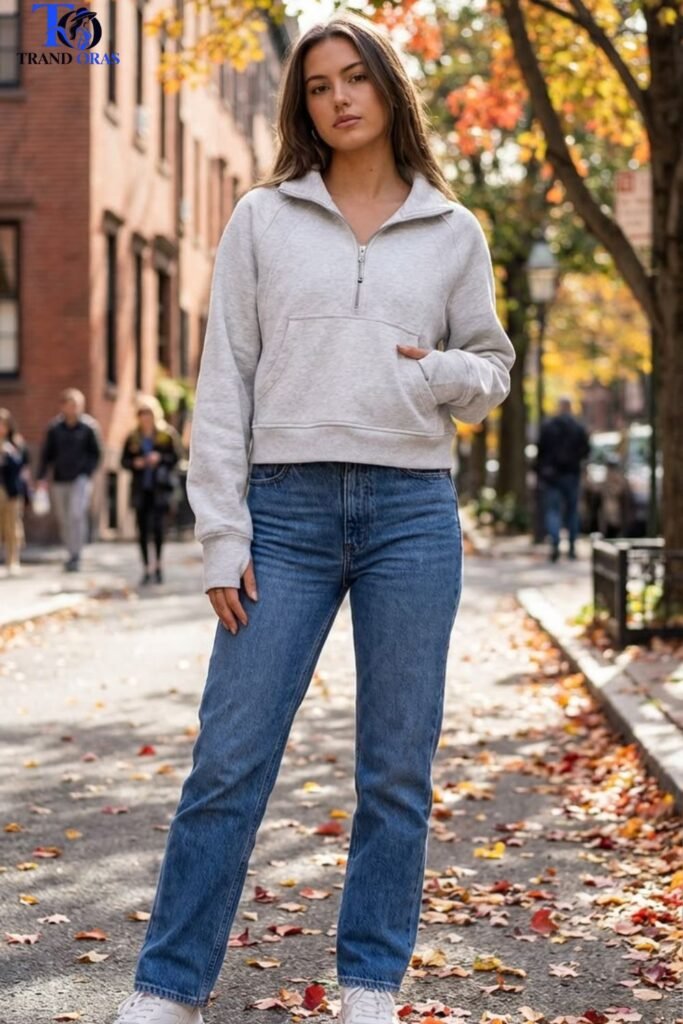
A quarter zip pullover paired with straight leg jeans offers one of the most practical casual outfits for winter, combining genuine warmth through the pullover’s substantial knit with a versatile, temperature adjustable neckline the zip provides. This small design detail, the partial zip, makes a meaningful practical difference compared to a standard crew neck sweater.
This particular garment style works well because the quarter zip allows for quick temperature adjustment without removing the entire layer, useful for transitioning between a cold outdoor commute and a warmer indoor destination without needing to fully change or add another piece. Unzipping partially provides ventilation exactly when needed.
A helpful example: someone who wears a standard crew neck sweater throughout an entire day, indoors and out, often finds themselves needing to fully remove the layer once indoors to avoid overheating, while the same warmth level in a quarter zip pullover can simply be unzipped partway for quick, convenient temperature regulation. This practical flexibility makes quarter zips genuinely useful within casual outfits for winter specifically.
Choosing a quarter zip in a substantial wool or wool blend fabric, rather than thin cotton, maximizes both the garment’s warmth and its practical performance throughout a full day of varying temperatures.
Fleece Lined Joggers With Clean Sneakers
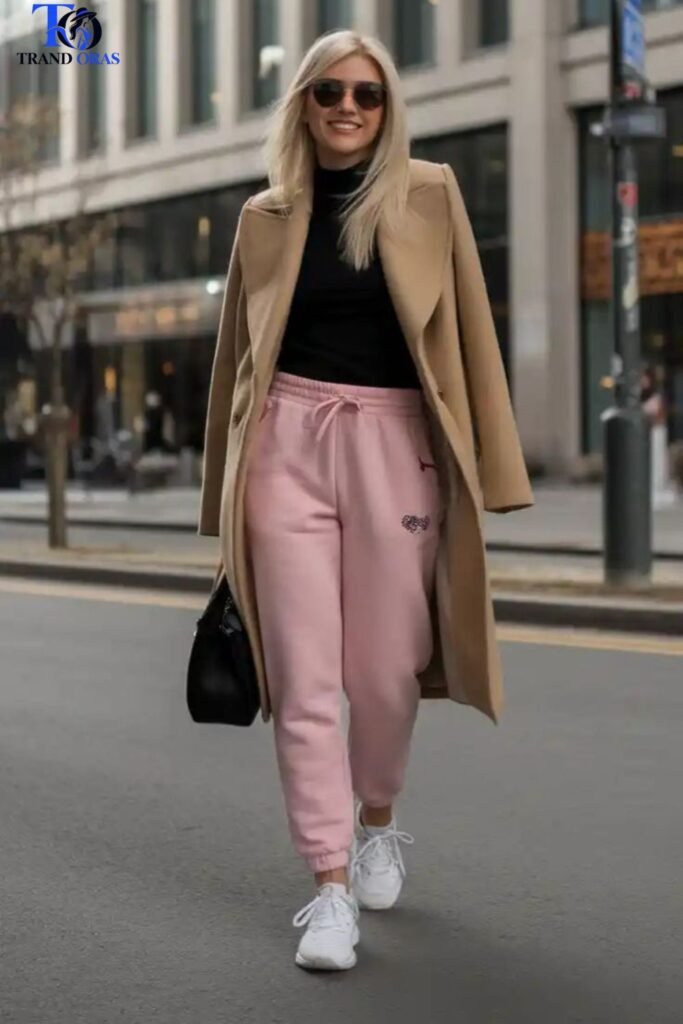
Fleece lined joggers paired with clean, simple sneakers create one of the more comfortable, practical casual outfits for winter, offering genuine warmth through the fleece lining while maintaining the relaxed, easy to wear silhouette joggers are generally chosen for in the first place.
This particular combination works especially well for errands, casual outings, or any day involving significant movement, since the joggers’ fleece lining provides meaningful insulation without the bulk heavier winter pants sometimes introduce, while still allowing genuine ease of movement throughout the day.
A helpful example: someone wearing standard, unlined joggers in genuinely cold weather often finds their legs remain noticeably cold despite the joggers’ comfortable fit, while switching specifically to a fleece lined version addresses this practical gap directly. This distinction between standard and fleece lined joggers matters considerably for anyone building casual outfits for winter around this particular garment category.
Pairing this combination with a substantial top layer, like a puffer or wool coat, extends its practicality into genuinely cold outdoor conditions, while the joggers alone remain comfortable for warmer indoor settings throughout the same day.
Flannel Lined Denim Jacket Over a Basic Tee
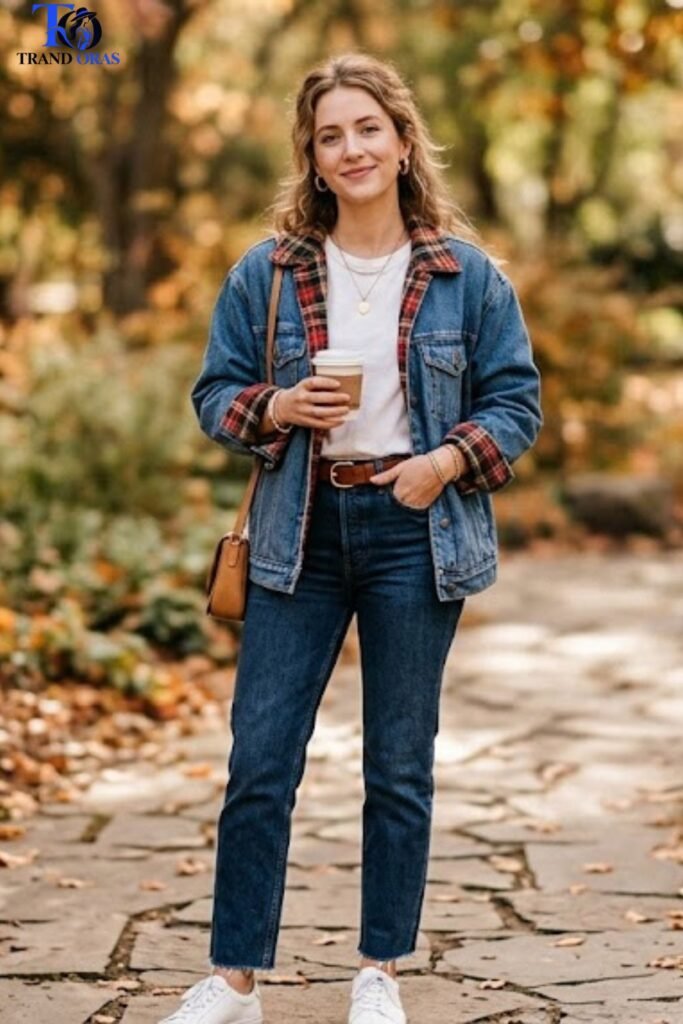
A flannel lined denim jacket, essentially a classic denim jacket with a soft, insulating flannel lining sewn in, updates casual outfits for winter with genuine cold weather practicality while maintaining denim’s inherently classic, everyday appeal. This particular piece solves the common problem of an unlined denim jacket simply not providing enough warmth for actual winter conditions.
This combination works well specifically because the flannel lining adds meaningful insulation without requiring you to abandon denim’s versatile, casual aesthetic, essentially extending a wardrobe staple many people already own into genuine winter functionality rather than retiring it until milder weather returns.
A helpful example: someone who continues wearing an unlined denim jacket through genuinely cold weather, relying purely on the style’s classic appeal, often finds themselves visibly underdressed for the actual temperature. Switching to a flannel lined version specifically addresses this practical gap among casual outfits for winter without abandoning denim’s classic, versatile styling appeal.
Layering a simple, fitted long sleeve tee or thermal top underneath adds further warmth while maintaining a relatively streamlined overall silhouette beneath the jacket.
Chunky Cardigan With Straight Leg Trousers
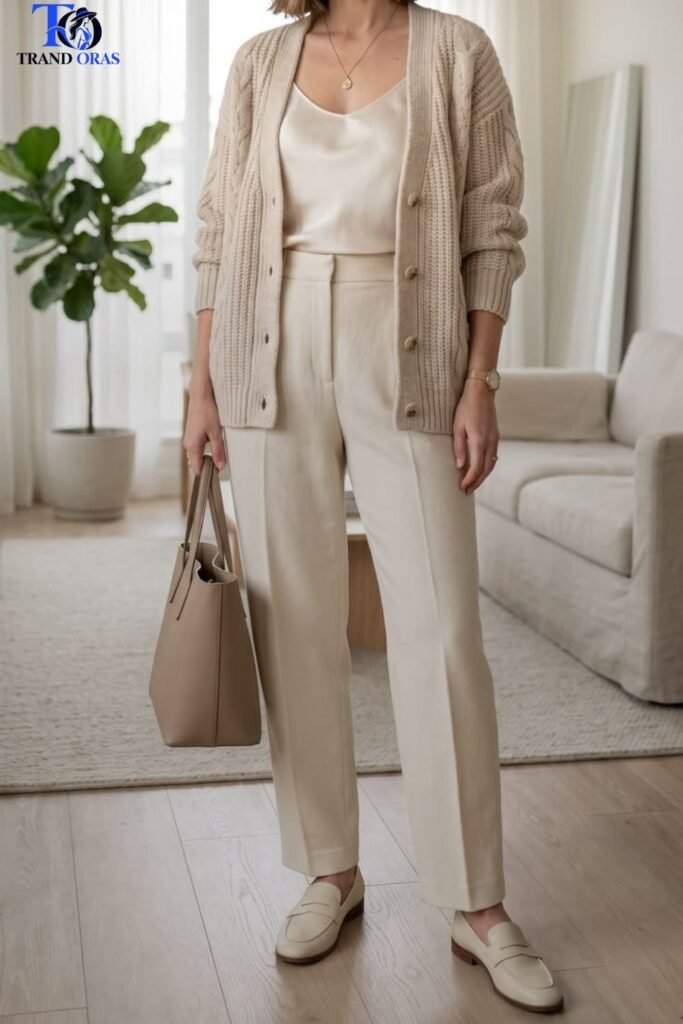
A substantial, chunky cardigan paired with straight leg trousers brings genuine cozy warmth to casual outfits for winter, offering a relaxed yet still put together silhouette suitable for casual outings, weekend errands, or relaxed work from home days requiring slightly more polish than pure loungewear.
This particular combination benefits from choosing a cardigan with real substance and weight, rather than a thin, purely decorative knit, since the cardigan itself needs to provide meaningful warmth given its position as the outfit’s primary insulating layer in many casual, everyday contexts.
A helpful example: someone who chooses a thin, lightweight cardigan purely for its aesthetic appeal, without considering actual fabric weight and insulation, often finds themselves needing additional layers underneath to achieve genuine warmth, while a properly substantial cardigan can function as adequate warmth largely on its own. This fabric weight consideration matters significantly when building casual outfits for winter around cardigans specifically.
Adding a simple belt, tied loosely, offers an easy way to introduce some waist definition to this combination without sacrificing its fundamentally cozy, relaxed character.
Coordinated Beanie, Scarf, and Glove Set
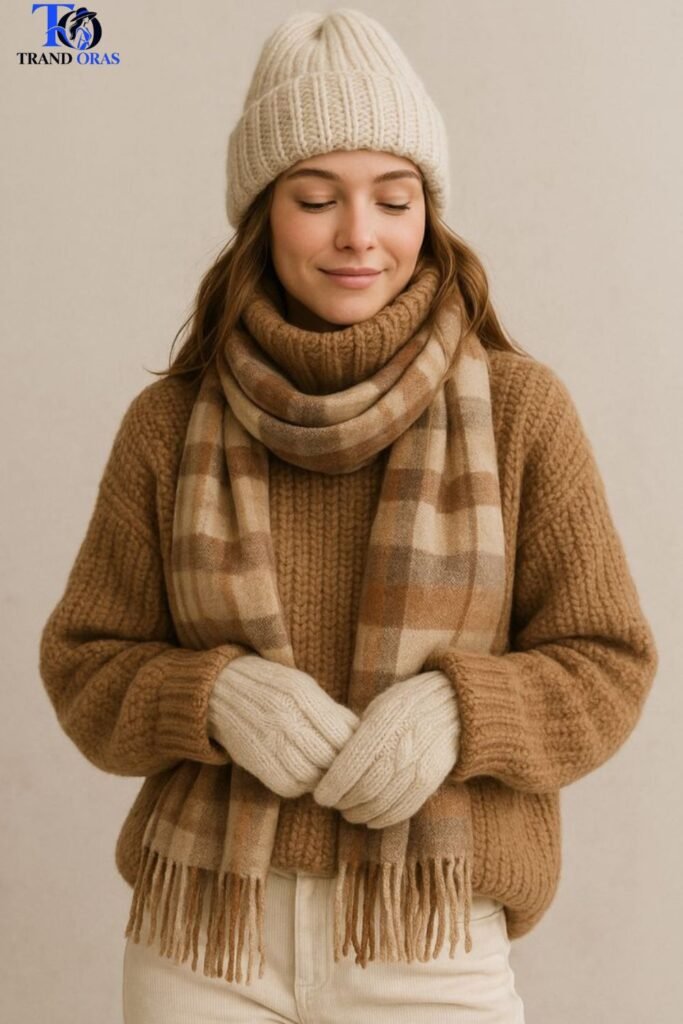
Investing in a genuinely coordinated beanie, scarf, and glove set does considerable practical work within casual outfits for winter, since these accessories address the extremities, head, neck, and hands, that lose heat quickly and often determine how comfortable you actually feel throughout a cold winter day far more than the base outfit itself.
This particular category also offers an easy, low commitment way to introduce color or personality into otherwise simple, neutral casual outfits for winter, since swapping accessories requires far less investment than changing entire outfit pieces while still meaningfully affecting the overall look.
A helpful example: someone who treats these accessories as purely functional afterthoughts, grabbing whatever’s available regardless of coordination or quality, often finds themselves genuinely cold despite an otherwise warm base outfit, since inadequate accessories can undermine overall comfort considerably. Investing in a matched, genuinely warm set specifically addresses this common oversight within casual outfits for winter.
Choosing accessories in a material like wool or cashmere, rather than purely synthetic, budget options, tends to provide noticeably better warmth and durability across repeated daily wear throughout the entire season.
Wool Blend Overshirt as a Lightweight Jacket
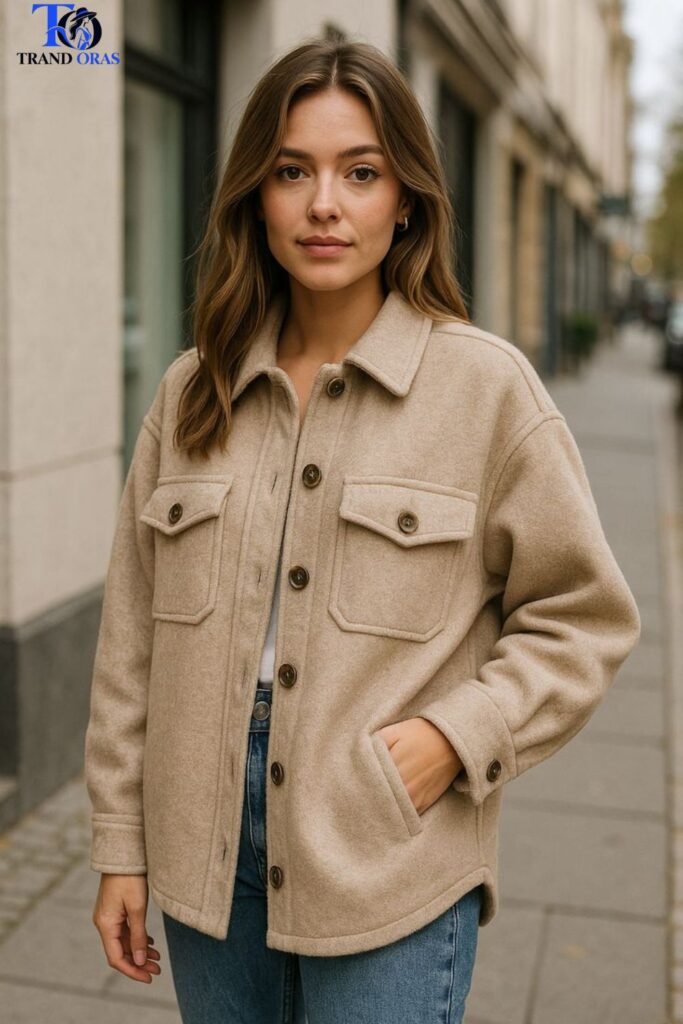
A substantial wool blend overshirt, essentially a heavier, jacket weight button up, functions as a genuinely versatile piece within casual outfits for winter, working as a standalone light jacket for milder days or as a mid layer underneath a heavier coat during genuinely cold conditions.
This particular garment category works especially well because it bridges the gap between a standard shirt and a full jacket, offering more structure and warmth than a typical button up while remaining considerably lighter and more casual than dedicated winter outerwear, making it genuinely useful across a range of temperatures.
A helpful example: someone who owns only lightweight shirts and heavy winter coats, without anything bridging these two extremes, often finds themselves either underdressed or overdressed for many actual winter days that fall somewhere in between. Adding a wool blend overshirt to casual outfits for winter fills this practical gap, offering genuine mid weight versatility many wardrobes lack.
This piece also works particularly well layered over a simple tee or thermal top, creating a complete, practical outfit with minimal additional styling effort required.
Corduroy Pants With a Crewneck Sweatshirt
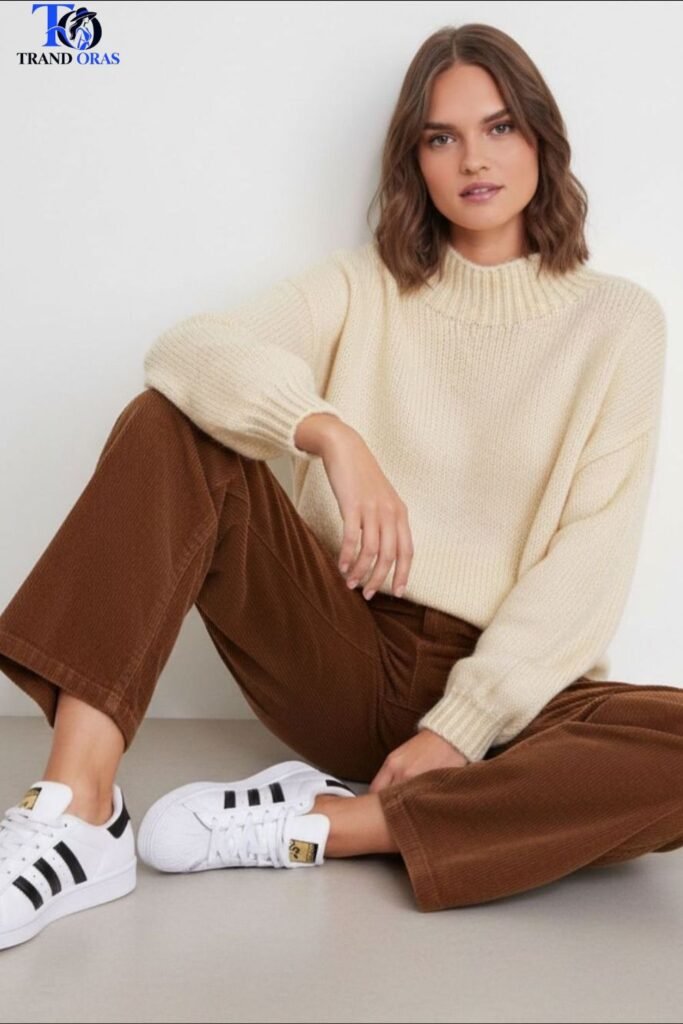
Pairing corduroy pants with a substantial crewneck sweatshirt brings genuine textural warmth and a relaxed, comfortable quality to casual outfits for winter, combining corduroy’s naturally insulating, ribbed fabric with the sweatshirt’s soft, cozy familiarity for an outfit that feels both practical and genuinely comfortable.
This particular combination works well because corduroy’s substantial fabric weight provides real warmth for the lower body, an area sometimes underdressed within casual winter outfits that focus heavily on top layer warmth while neglecting equivalent consideration for pants.
A helpful example: someone who prioritizes warm layering up top while wearing thin, lightweight pants underneath often finds their legs genuinely cold despite feeling adequately warm elsewhere, since pants sometimes receive less styling and warmth consideration than tops within casual outfits for winter. Choosing substantial corduroy specifically addresses this common oversight, providing meaningful lower body warmth to match upper body layering.
Adding warm socks and boots completes this combination’s practical warmth from top to bottom, ensuring no part of the outfit leaves you genuinely cold during actual winter conditions.
Layered Henley With a Lightweight Vest
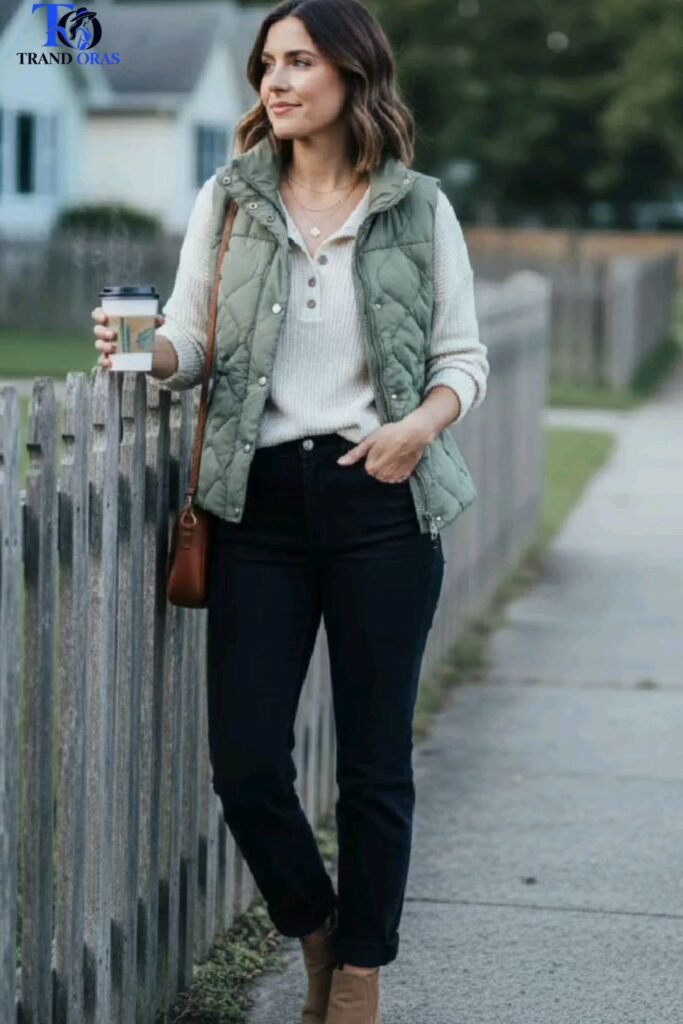
Layering a henley shirt underneath a lightweight vest creates a genuinely practical, easy to wear casual outfit for winter, combining the henley’s soft, comfortable base layer with the vest’s core focused insulation, without the bulk a full jacket might introduce for milder winter days or genuinely active pursuits.
This particular combination benefits from the vest’s sleeveless design specifically, since it provides meaningful core warmth while allowing full arm mobility, making it especially practical for active days involving significant movement where a full jacket’s sleeves might feel restrictive or cause overheating.
A helpful example: someone planning an active winter day, like running errands that involve frequent movement and lifting, often finds a vest layered over a henley provides better practical function than a full jacket, since the vest keeps the core warm without restricting arm movement the way bulkier sleeved outerwear sometimes does. This makes vest layering a genuinely practical choice among casual outfits for winter for active days specifically.
Choosing a henley in a substantial, rather than paper thin, knit fabric ensures this base layer provides meaningful warmth on its own, rather than relying entirely on the vest for insulation.
Relaxed Fit Denim With Casual Boots
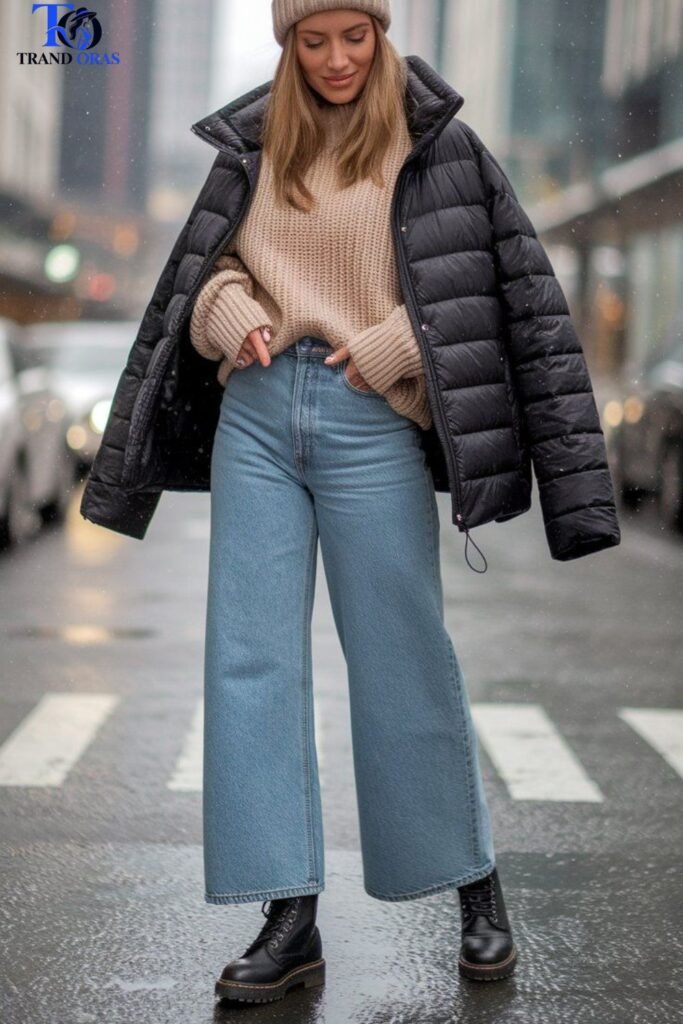
Relaxed fit denim paired with casual, weather appropriate boots offers one of the most versatile casual outfits for winter, working across countless top layer combinations while providing genuine practical durability and reasonable warmth through denim’s substantial fabric weight compared to lighter warm weather alternatives.
This particular combination benefits significantly from choosing boots specifically designed for actual winter conditions, rather than purely stylish options lacking adequate traction or insulation, since practical footwear genuinely matters for both comfort and safety during colder, potentially icy or wet conditions.
A helpful example: someone who pairs relaxed denim with purely fashion focused boots lacking genuine winter functionality often finds themselves both cold and potentially unsafe on icy surfaces, while choosing boots specifically rated for winter conditions addresses both concerns simultaneously without necessarily sacrificing style. This footwear consideration matters significantly within casual outfits for winter built around denim specifically.
Layering thermal leggings underneath relaxed denim, when temperatures drop particularly low, extends this combination’s practical warmth considerably without requiring any change to the visible outfit itself.
Understanding Fabric Weight and Material for Genuine Warmth
Understanding which specific fabrics and material weights genuinely provide warmth, rather than simply looking cozy, represents one of the most practically useful insights for building casual outfits for winter that generic style guides often overlook entirely. Wool, fleece, and technical synthetic blends generally outperform cotton for actual insulation, particularly once any moisture, from sweat, snow, or rain, enters the equation.
This distinction matters because many people build casual outfits for winter primarily around visual coziness, chunky knits, soft sweatshirts, without necessarily considering the underlying fiber content that determines how these pieces actually perform in real winter conditions specifically.
A helpful example: someone comparing two visually similar sweaters, one cotton and one wool, might assume they provide equivalent warmth based on appearance alone, while the wool version actually provides considerably better insulation, particularly in damp or genuinely cold conditions where cotton’s performance drops off significantly. Prioritizing fiber content specifically, rather than just visual coziness, helps build casual outfits for winter that genuinely perform as needed.
Checking garment labels for fiber content before purchasing, rather than judging warmth purely by how thick or soft a piece feels, helps ensure your casual winter wardrobe actually delivers the practical warmth it appears to promise.
Common Mistakes to Avoid With Casual Outfits for Winter
One of the most frequent mistakes is prioritizing cotton heavy pieces for their softness and familiarity without considering how significantly this fiber’s insulating performance drops once exposed to moisture. Choosing wool, fleece, or technical blends for key layers specifically helps avoid this common warmth shortfall.
Another common error involves neglecting extremities, hands, head, and neck, in favor of focusing warmth efforts entirely on the torso and legs, even though these smaller areas significantly affect overall comfort and heat retention. Investing in genuinely warm accessories helps address this frequently overlooked gap within casual outfits for winter.
Choosing purely stylish footwear without adequate consideration for actual winter conditions, traction, insulation, water resistance, is another frequently repeated mistake, since impractical footwear undermines both comfort and safety regardless of how well the rest of the outfit performs. Prioritizing genuinely functional boots addresses this practical concern directly.
Finally, building an entire winter wardrobe around a single fixed warmth level, rather than incorporating genuine layering flexibility, is a mistake worth avoiding, since actual daily conditions vary considerably and a layerable system adapts far better than any single, fixed warmth outfit possibly could.
The Future of Casual Outfits for Winter
Casual outfits for winter continue to evolve alongside broader advances in technical fabric technology originally developed for performance and outdoor wear, now increasingly incorporated into mainstream, everyday casual clothing. This shift means genuinely warm, functional pieces no longer need to sacrifice comfort or everyday wearability the way earlier technical outerwear sometimes did.
There’s also a growing emphasis on multi purpose, versatile pieces designed to transition between different activity levels and settings, reflecting broader consumer interest in a smaller, more thoughtfully chosen wardrobe rather than numerous single purpose winter items serving narrow, specific functions.
Sustainability considerations are shaping this space as well, with more brands developing genuinely durable, weather appropriate casual pieces designed to perform reliably across multiple winter seasons rather than trend driven items meant for limited, single season wear.
Looking ahead, personalized styling and material recommendation tools, including apps that account for actual local weather patterns and daily activity levels, are beginning to help people build casual outfits for winter specifically suited to their real climate and lifestyle rather than generic, one size fits all cold weather styling advice.
Conclusion
Casual outfits for winter work best when fabric choice and practical layering take priority alongside personal style. From a quarter zip pullover with jeans to fleece lined joggers, there’s an option here suited to nearly every daily routine and comfort need. The key is prioritizing genuinely insulating materials over pieces that simply look cozy. Ready to update your everyday winter wardrobe Use this guide as your starting point for building casual outfits for winter that keep you genuinely warm and comfortable.

Natalie Cooper is a fashion and style writer with 6 years of experience in fashion and outfit inspiration. Through Trand Oras, she shares fresh outfit ideas, seasonal trends, and practical styling tips to help readers create stylish, confident looks for every occasion.


