

Trendy Outfit for Winter: The Complete Guide to Stylish, Warm Cold Weather Looks
A trendy outfit for winter has to solve a problem that warm weather dressing never faces: looking current while also keeping you genuinely warm. Many people end up choosing one over the other, either bundling up in shapeless layers or shivering through a look that photographs well but fails in real cold. The best winter outfits manage both, using fabric, silhouette, and layering choices that feel fresh without sacrificing practical warmth.
This guide goes beyond a simple list of coats and boots. It explains which pieces and combinations tend to read as genuinely current, how to build a trendy outfit for winter from items you may already own, and details most articles skip entirely, like why proportion and texture matter more than any single trending item, and how to avoid the common mistake of buying a trendy piece that doesn’t actually work with the rest of your wardrobe. Whether you’re refreshing your cold weather closet or starting from scratch, this is the deeper, more practical guide.
What Makes a Trendy Outfit for Winter Actually Work
A trendy outfit for winter works when three things line up: genuine warmth, a silhouette that looks intentional, and at least one element that feels current rather than generic. Most winter outfits fail on one of these three. They might be warm but shapeless, or stylish but too thin for real cold, or practical but indistinguishable from what anyone wore five years ago.
The key insight many style guides miss is that trendiness in winter clothing usually comes from proportion and texture rather than from any single trending item. A well cut coat in a rich texture, paired with the right balance of fitted and loose pieces, tends to look more current than a head to toe collection of whatever happens to be popular this season.
A helpful example: two people might both wear a camel coat, black trousers, and boots. One looks polished and current because the coat’s shoulders are slightly relaxed, the trousers have a modern wide leg, and the boots have a chunky sole. The other looks dated because every piece is cut in an older, narrower silhouette. The items are nearly identical, but the proportions tell completely different stories.
Understanding this helps you shop and style more strategically. Rather than chasing every trend, focus on getting the proportions, fabrics, and fit right, then add one or two current details to signal freshness.
Must Read: https://trandoras.com/outfit-inspiration-for-winter/
Statement Coats as the Foundation of a Trendy Winter Look

A statement coat is often the single most visible piece in a trendy outfit for winter, since it covers most of the rest of the outfit during cold weather. This makes it the highest-impact place to invest. A coat with strong shape, interesting texture, or a rich color can make even a simple outfit underneath look deliberate and put together.
Oversized wool coats, long wrap-style coats, and structured shearling-style options all tend to read as current, largely because they combine real warmth with a strong silhouette. The key is choosing a cut that suits your frame, since an oversized coat that overwhelms your proportions looks less intentional than a slightly more tailored version in the same style.
A helpful example: someone building a winter wardrobe on a limited budget might choose one excellent coat in a versatile color like camel, chocolate brown, or deep charcoal, then rotate simple outfits underneath. This tends to look more stylish than owning several mid-quality coats, since the coat’s quality and shape carry the visual weight of the entire outfit.
Checking the fabric composition matters as well. A coat with a meaningful percentage of wool tends to provide better warmth and drape than a thin, fully synthetic alternative, which affects both how it looks and how it performs on genuinely cold days.
Monochrome Layered Looks for Effortless Polish
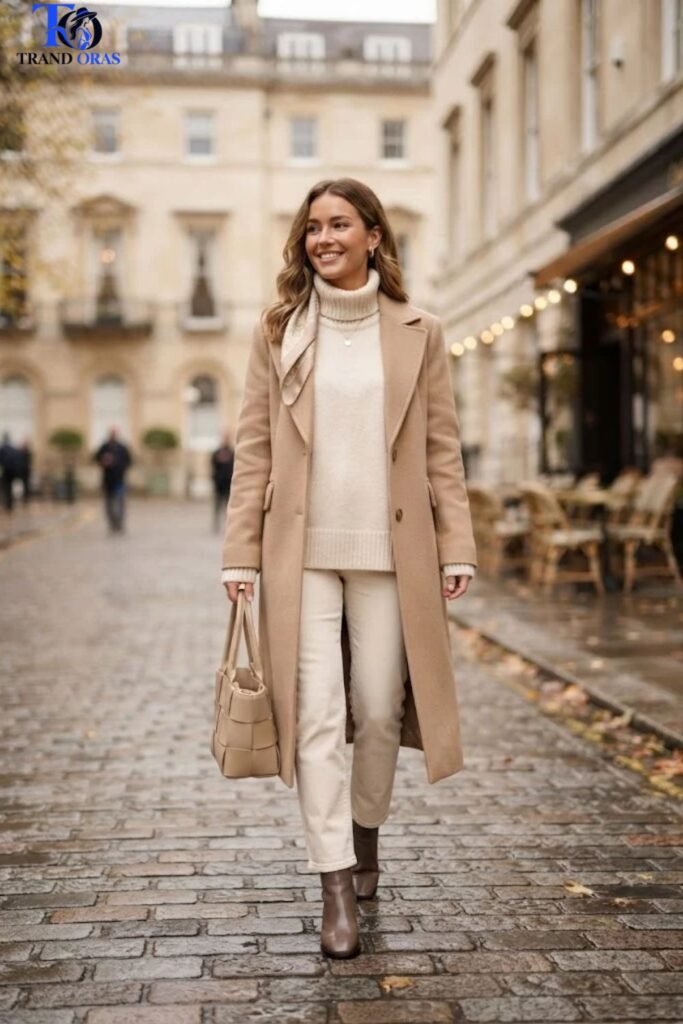
Monochrome dressing, wearing varying shades and textures of a single color family, has become one of the most reliable approaches to a trendy outfit for winter. It reads as sophisticated and intentional, while also being remarkably easy to put together, since you don’t need to coordinate multiple competing colors.
The trick to making monochrome work is varying texture rather than relying on a single flat fabric throughout. A cream knit sweater, ivory wool trousers, and a beige coat all feel distinct from one another because the textures differ, even though the colors sit in the same family. Without this texture variation, an all-one-color outfit can look flat or accidentally like a uniform.
A helpful example: an all-brown outfit combining a chocolate turtleneck, tan trousers, and a camel coat creates visual depth through the shift between darker and lighter tones. Adding leather boots or a suede bag introduces additional texture without breaking the color story, making the whole look feel layered and considered.
This approach also simplifies shopping, since monochrome pieces tend to mix and match easily across a wardrobe, giving you more outfit combinations from fewer items, a practical advantage when building a winter capsule wardrobe.
Chunky Knits and Oversized Sweaters
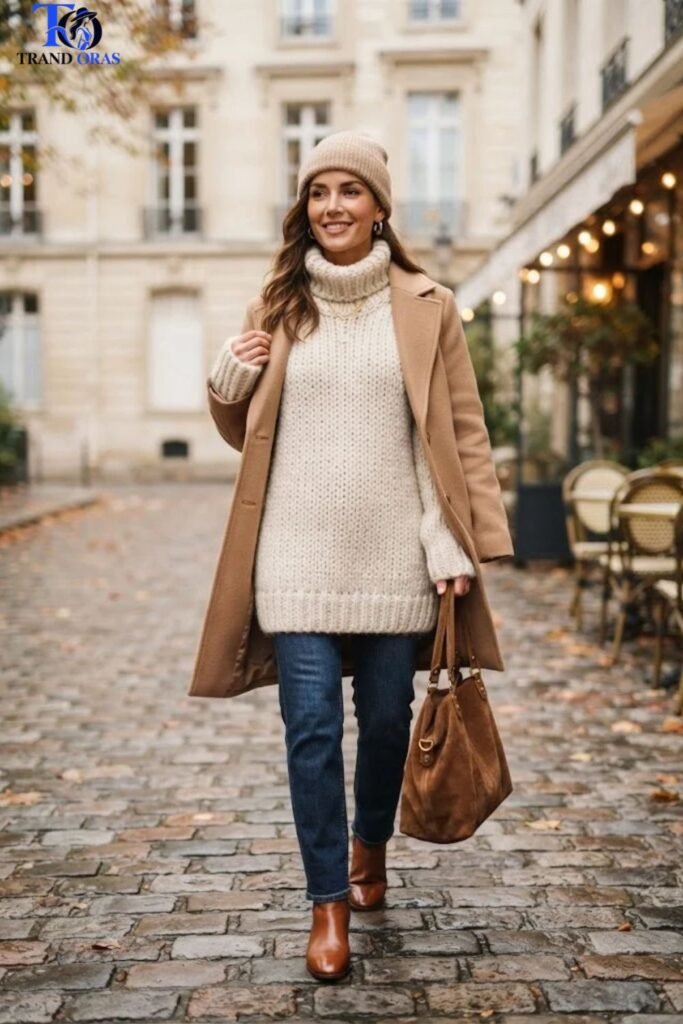
Chunky knits remain a cornerstone of any trendy outfit for winter, offering a combination of real warmth and visual texture that thinner fabrics can’t match. Cable knits, ribbed knits, and oversized pullovers all work well, particularly when the fit is relaxed enough to look intentional rather than simply too large.
The most current way to wear a chunky sweater typically involves balancing its volume with a more streamlined bottom half. A slouchy knit paired with fitted trousers, slim jeans, or a sleek skirt creates a deliberate contrast that looks styled rather than shapeless. When both top and bottom are voluminous, the overall silhouette can lose definition.
A helpful example: someone wearing an oversized cream cable-knit with wide-leg trousers might find the combination feels heavy and shapeless, while the same sweater paired with fitted, straight-leg pants and a belted coat on top reads as balanced and polished. The sweater itself hasn’t changed; only the proportions around it have.
Choosing knits in quality natural fibers like wool or wool blends also tends to improve how they hold their shape over time, avoiding the stretched, pilled look that lower-quality synthetic knits often develop after a few washes.
Wide Leg Pants and Tailored Trousers
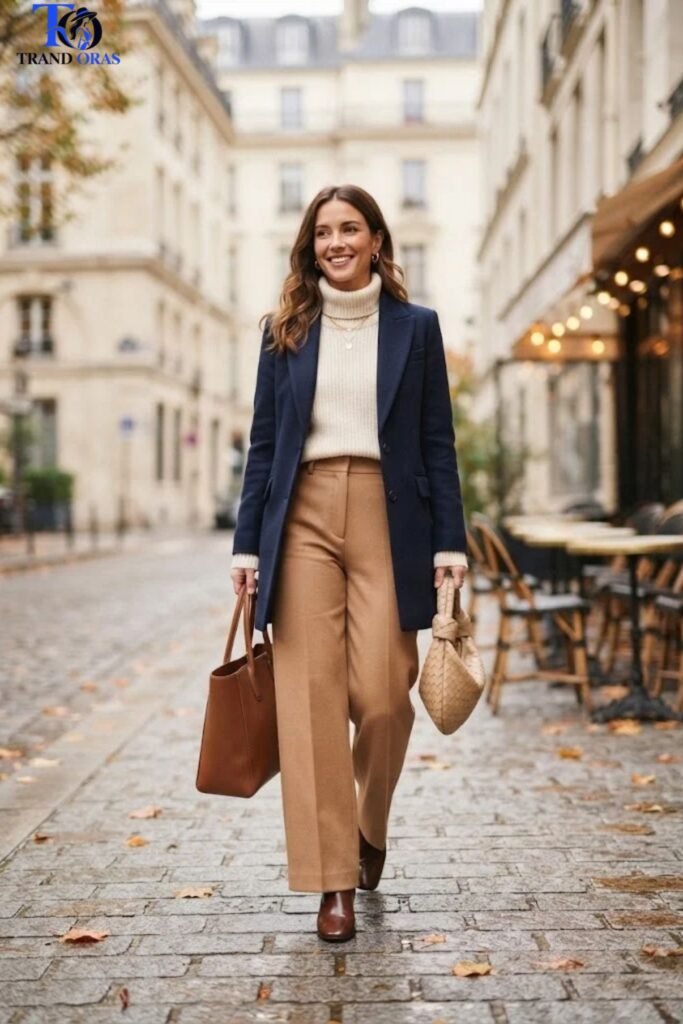
Wide leg and relaxed tailored trousers have become a staple of a trendy outfit for winter, partly because they allow for layering thermal leggings or tights underneath without looking bulky. This gives them a genuine practical advantage over very slim-cut pants during truly cold weather.
Wool and wool-blend trousers tend to work especially well, providing warmth and a refined drape that cotton alternatives usually can’t match in cold conditions. Pairing them with a fitted knit on top and a longer coat creates a long, elongated silhouette that reads as both current and flattering across many body types.
A helpful example: someone commuting in freezing temperatures might wear thin thermal leggings beneath wide-leg wool trousers, gaining significant warmth without any visible extra bulk. The loose cut of the trousers hides the extra layer entirely, something a slim-fit pant simply couldn’t do without looking tight or uncomfortable.
Length matters here as well. Trousers that just skim the top of your boots or shoes tend to look more polished than pants that bunch heavily at the ankle or drag on wet ground, so hemming to the right length for your most-worn winter footwear makes a noticeable difference.
Leather and Faux Leather as a Winter Texture
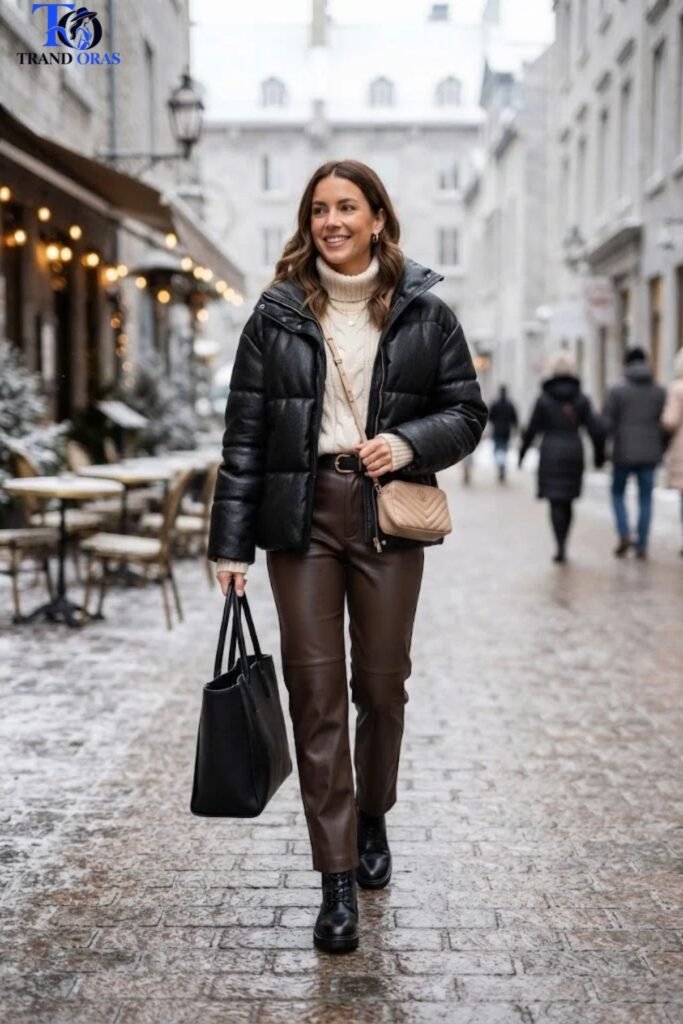
Leather and high-quality faux leather add edge and texture to a trendy outfit for winter, standing out from the knits and wools that dominate cold-weather dressing. A leather jacket, trousers, skirt, or even a leather-look trench can instantly make a simple outfit feel more current and deliberate.
One practical advantage worth knowing: leather tends to block wind effectively, which makes it genuinely useful in cold, windy conditions beyond just looking stylish. Layering a warm knit underneath a leather jacket provides both insulation and a striking contrast between soft and structured textures.
A helpful example: someone wearing a chunky knit sweater with leather trousers and ankle boots creates a look that balances soft and sleek, warm and edgy. The contrast between the cozy knit and the polished leather is part of what makes the outfit feel modern, rather than purely practical.
When choosing faux leather, quality matters considerably. Better-quality options drape and age more convincingly, while cheaper versions can look stiff, shiny, or plasticky, undermining the polished effect that makes leather appealing in the first place.
Boots That Define a Trendy Winter Outfit
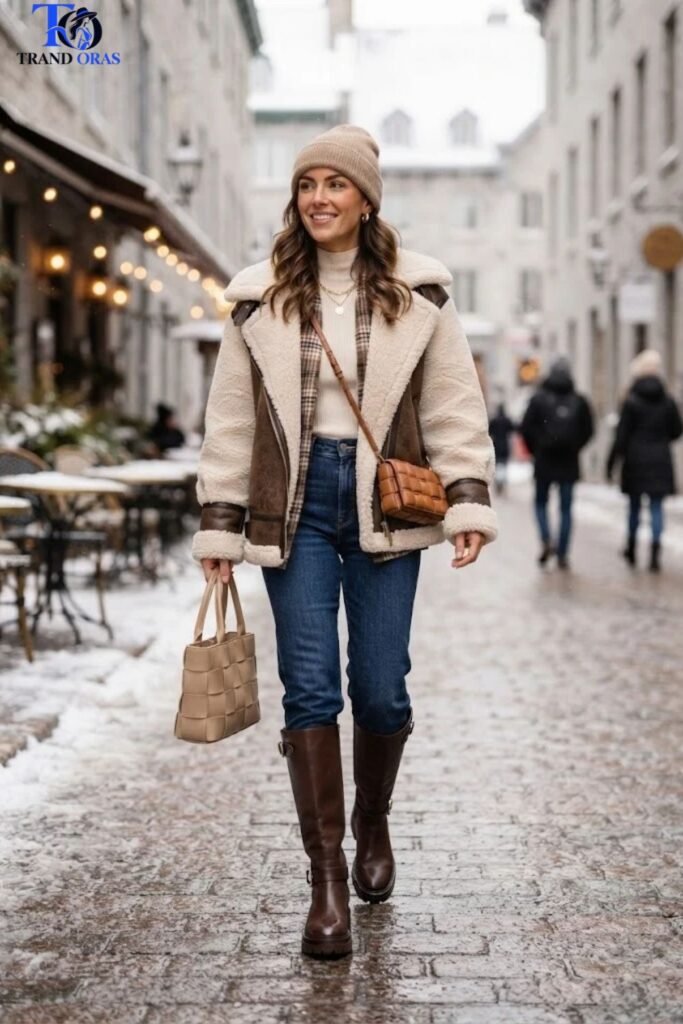
Footwear often makes or breaks a trendy outfit for winter, since boots are both highly visible and genuinely functional in cold or wet conditions. Knee-high boots, chunky lug-sole boots, and sleek ankle boots all tend to read as current, depending on the overall style of the outfit they accompany.
Chunky-soled boots have the added practical benefit of providing better insulation from cold ground and better traction on slippery surfaces, making them a rare case where a current style and a practical advantage align perfectly. Knee-high boots, meanwhile, offer extra warmth for the lower leg and pair elegantly with skirts or dresses in colder weather.
A helpful example: someone building a versatile winter wardrobe might choose one pair of sleek, waterproof knee-high boots for dressier occasions and one pair of chunky lug-sole boots for casual, everyday wear, covering most styling needs without needing a large collection of footwear.
Treating leather or suede boots with a waterproofing spray before the season starts helps them survive salt, slush, and snow, protecting a footwear investment that can otherwise get damaged quickly in harsh winter conditions.
Accessories That Elevate a Winter Outfit
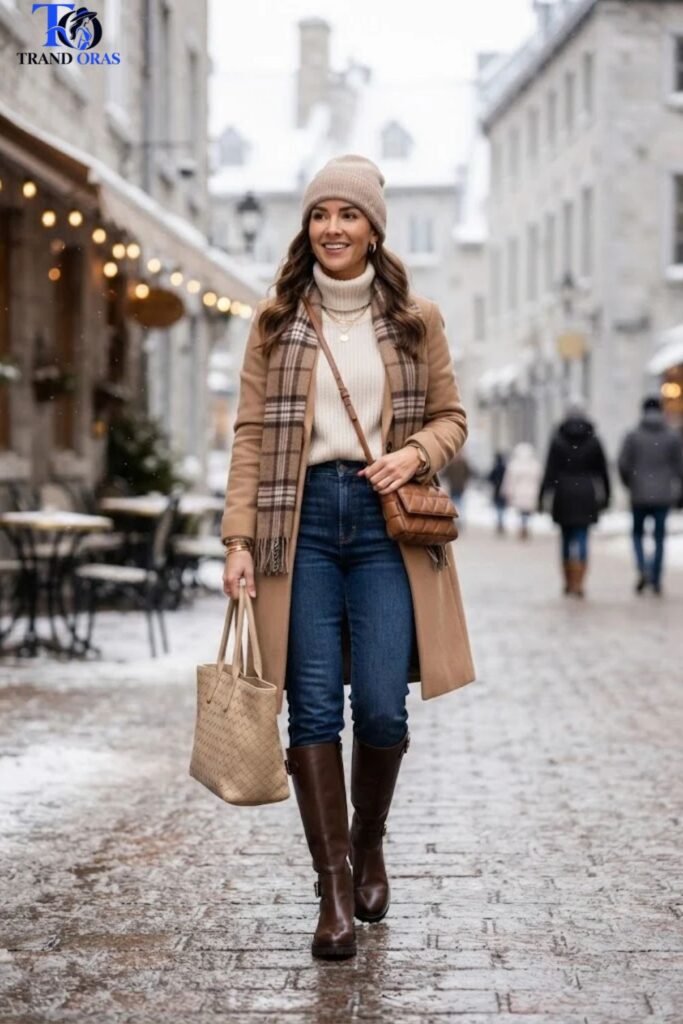
Accessories offer one of the most efficient ways to make a trendy outfit for winter feel current without replacing your entire wardrobe. A well-chosen scarf, hat, or pair of gloves can transform a basic outfit, while also providing genuine warmth that purely decorative accessories wouldn’t.
Oversized scarves, knit beanies, and structured leather gloves all tend to work well, particularly when their textures and colors complement the rest of the outfit. A chunky knit scarf in a contrasting tone can add visual interest to an otherwise monochrome look, while leather gloves add a polished finishing detail.
A helpful example: someone wearing a simple black coat and jeans might add a rich burgundy scarf and cream knit hat, instantly making the outfit feel more styled and seasonal without changing any core pieces. These small additions deliver a significant visual impact for a relatively modest investment.
Layering accessories thoughtfully matters too. Tucking a scarf into a coat collar versus draping it loosely changes how the entire outfit reads, so experimenting with how you wear each accessory can give a single piece multiple distinct looks.
Color Palettes That Feel Current in Winter
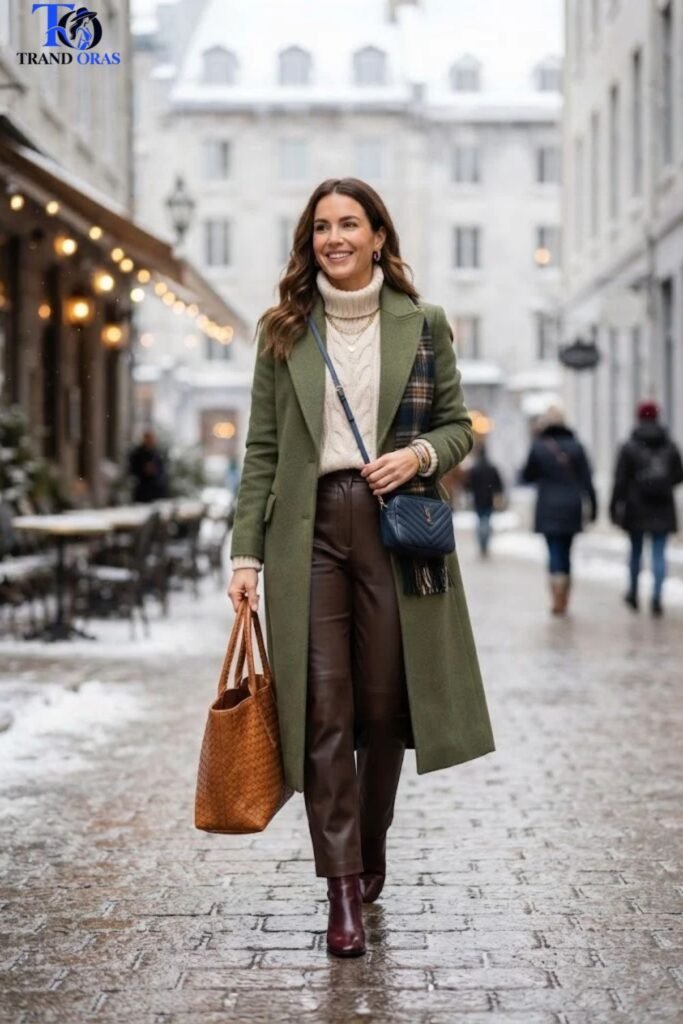
Color choice strongly influences whether a trendy outfit for winter feels current or dated. Rich neutrals like camel, chocolate brown, cream, and charcoal have become reliable foundations, offering versatility and a sophisticated feel that pairs easily with nearly everything else in a wardrobe.
Deeper jewel tones such as emerald, burgundy, and navy also work particularly well in winter, standing out against the season’s typically gray, muted backdrop. These colors add vibrancy without feeling out of place in cold weather, and they tend to photograph beautifully as well.
A helpful example: someone with a wardrobe full of black might refresh their winter outfits simply by swapping in one or two pieces in chocolate brown or deep green, such as a coat or a knit sweater. This introduces a more current color story without requiring a complete wardrobe overhaul.
Considering your personal coloring helps too. Some shades flatter certain skin tones and hair colors more than others, so choosing winter colors that complement your natural features tends to make an outfit look more polished, regardless of how closely it follows a particular trend.
Dressing Up a Trendy Outfit for Winter Evenings and Holidays
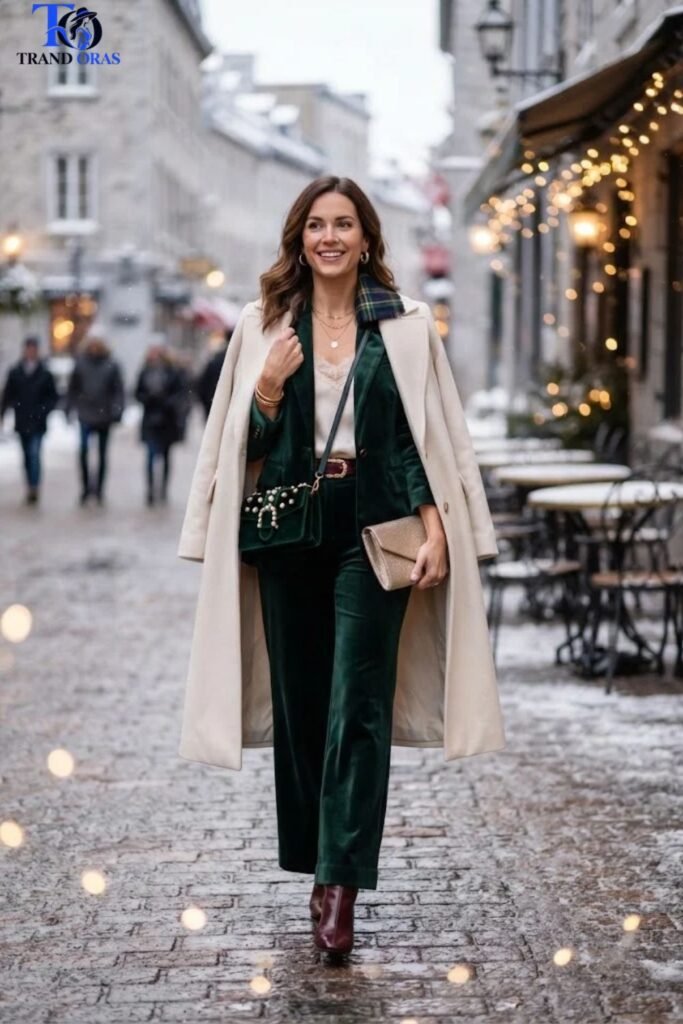
Evening and holiday occasions call for a trendy outfit for winter that feels more elevated while still handling the cold. Rich fabrics like velvet, satin, and fine knits tend to work particularly well, adding visual luxury while still offering a reasonable level of warmth when layered thoughtfully.
A fitted knit dress or a satin skirt paired with a chunky knit cardigan and tall boots can bridge the gap between dressy and cozy. Adding a statement coat on top keeps you warm during transit, while the outfit underneath reads as appropriately festive once you arrive indoors.
A helpful example: someone heading to a winter holiday party might wear a velvet blazer over a simple silk-look top and tailored trousers, adding metallic jewelry and heeled ankle boots. The velvet provides richness and texture, while the structured blazer offers a bit of extra warmth indoors.
Thinking about the full journey also helps. A coat that works with a dressy outfit, plus footwear that handles snow or slush before you change shoes at the venue, ensures you stay comfortable without sacrificing the polished look you’ve planned.
Casual Everyday Trendy Winter Outfits
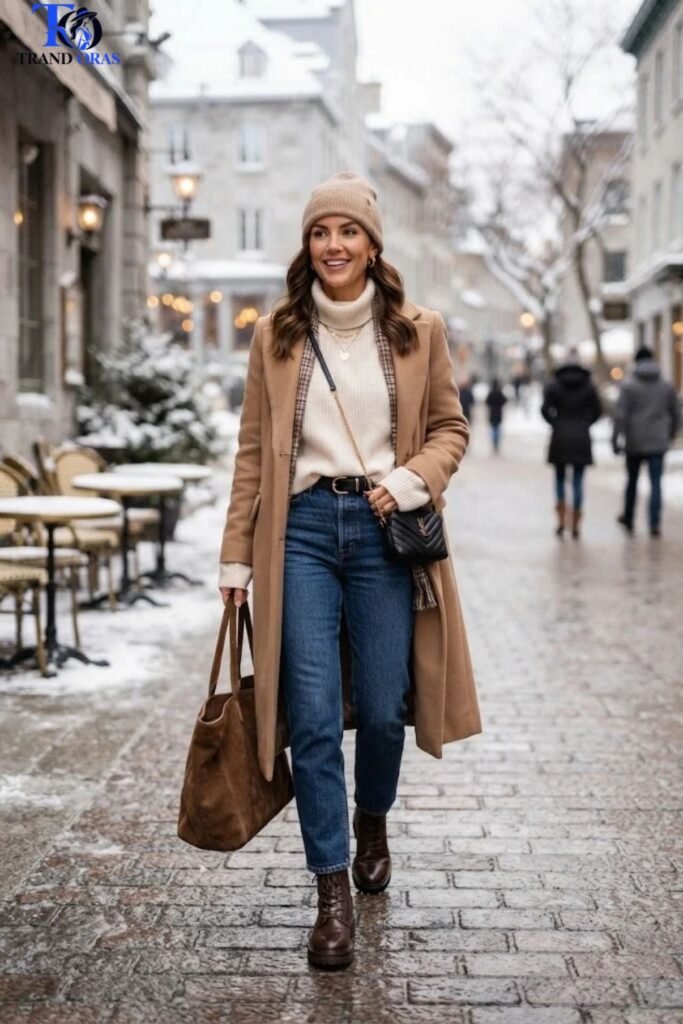
Casual days still benefit from a trendy outfit for winter, and the good news is that everyday looks can feel current without much effort. A reliable formula combines a comfortable knit, well-fitting jeans or trousers, a stylish coat, and boots that handle real weather.
Small details often make the difference between a basic casual outfit and one that feels deliberately styled. Rolling jeans slightly to show off boots, choosing a coat with an interesting texture, or adding a simple accessory like a structured tote can lift a casual look noticeably without requiring extra time or money.
A helpful example: a weekend outfit of a cream cable knit sweater, straight leg dark jeans, a camel coat, and lug sole boots feels cozy and put together without trying too hard. Each piece is simple, but the combination of textures and the coherent color palette make it look intentional.
Building a few reliable casual formulas like this one, then rotating different colors and textures within them, makes everyday dressing easier and reduces decision fatigue during busy winter mornings.
Building a Winter Capsule Wardrobe on a Budget
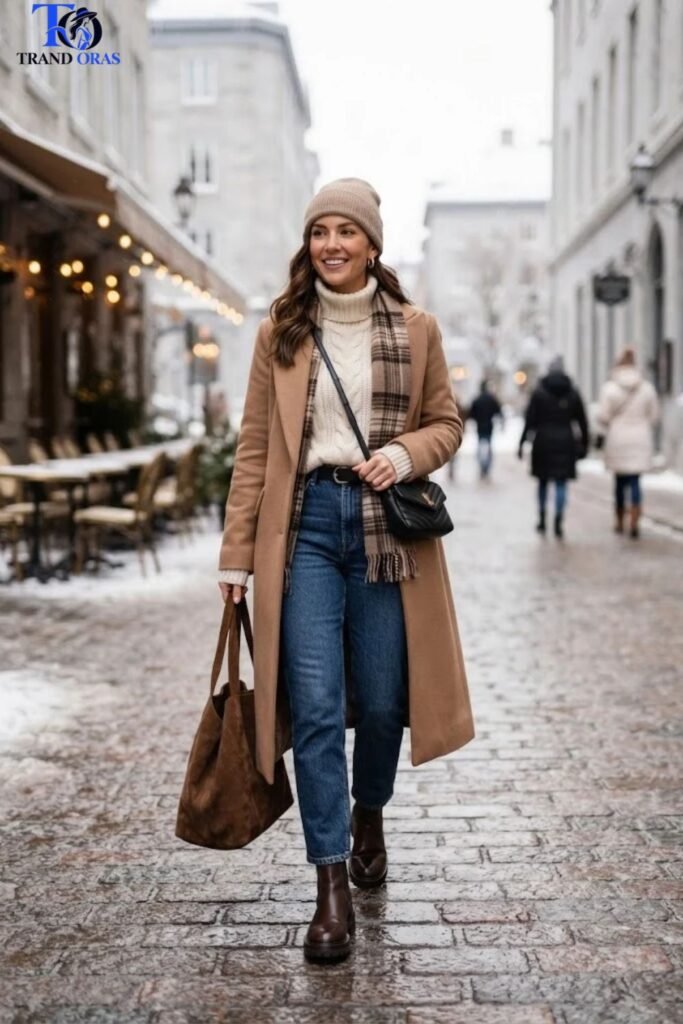
A trendy outfit for winter doesn’t require a large or expensive wardrobe. A small capsule of well chosen pieces can create dozens of outfit combinations, particularly when the items share a cohesive color palette and mix easily with one another.
Prioritizing quality in the pieces that get the most wear, such as a coat, boots, and a few core knits, tends to deliver better long term value than spreading a budget across many cheaper, less durable items. These foundational pieces carry most of the visual and practical load throughout the season.
A helpful example: someone building a winter capsule might choose a camel coat, two quality sweaters in complementary neutrals, one pair of wool trousers, one pair of dark jeans, and two pairs of boots. These eight items can be combined in many ways, covering everything from casual days to office wear.
Shopping end-of-season sales, secondhand options, and quality thrift finds can also stretch a budget considerably, particularly for coats and knitwear, where well made vintage or pre owned pieces often outperform newer, lower quality alternatives at a similar price.
Common Mistakes to Avoid With a Trendy Outfit for Winter
One frequent mistake is prioritizing a trendy item over how well it fits with the rest of your wardrobe. A striking coat or pair of boots that doesn’t coordinate with anything else you own often ends up unworn, regardless of how current it looked in the store.
Another common error involves sacrificing real warmth for style, particularly with thin, fashion first pieces that look good but fail in genuinely cold conditions. Choosing quality insulation and appropriate fabrics, then adding style through cut and color, tends to produce more wearable results.
Poor layering also undermines many winter outfits, with too many bulky pieces stacked together creating a shapeless silhouette. Thinner, higher-quality base layers often provide equivalent warmth with far less bulk, preserving both comfort and the clean lines of a well-styled outfit.
Finally, neglecting care and maintenance can quickly make even a good trendy outfit for winter look worn. Brushing wool coats, de pilling knits, and waterproofing boots all extend the life and appearance of cold weather pieces significantly.
The Future of Trendy Outfits for Winter
The trendy outfit for winter continues to evolve alongside broader shifts in fashion toward practicality, sustainability, and versatility. Many people increasingly prioritize fewer, higher quality pieces that work across multiple occasions, rather than buying large quantities of fast-fashion items that rarely survive more than a single season.
Technical fabrics are also advancing, with improved insulation, moisture wicking, and wind-blocking materials increasingly available in more stylish, less bulky forms. This helps close the gap between performance outerwear and fashion, making it easier to stay genuinely warm without sacrificing a polished appearance.
Resale and rental markets are likely to keep growing, offering more accessible ways to wear current styles without the full cost or environmental impact of buying new. Quality winter pieces in particular tend to hold value well, making secondhand shopping a practical strategy.
Looking ahead, personalized styling tools, including virtual try on and wardrobe planning apps, are making it easier to visualize how pieces work together before buying, helping reduce impulse purchases and build cohesive, wearable winter wardrobes.
Conclusion
A trendy outfit for winter comes together when warmth, proportion, and a few current details all work in harmony. From statement coats and monochrome layers to chunky knits and the right boots, small, deliberate choices make cold weather dressing feel fresh rather than forced. Ready to update your winter wardrobe Use these ideas as a starting point for building looks that keep you warm and genuinely stylish.
Natalie Cooper is a fashion and style writer with 6 years of experience in fashion and outfit inspiration. Through Trand Oras, she shares fresh outfit ideas, seasonal trends, and practical styling tips to help readers create stylish, confident looks for every occasion.


