

Winter Office Outfits: The Complete Guide to Polished, Professional Cold Weather Style
Winter office outfits present a genuinely specific styling challenge: balancing real warmth for the commute against the more moderate temperatures most climate controlled offices maintain indoors. Overdress for the cold outside and you risk overheating at your desk; underdress for comfort inside and the walk to work becomes genuinely uncomfortable. Getting winter office outfits right actually depends on strategic layering that works across both environments smoothly.
This guide goes beyond a simple gallery of winter office outfits. It explains how layering order, fabric choice, and dress code all interact specifically within professional settings during colder months, along with details most articles skip entirely like why certain fabrics that look professional also happen to transition between temperature extremes more gracefully than others, and why coat storage at the office is a genuinely practical styling consideration most guides ignore. Whether you’re dressing for a formal corporate environment or a more relaxed creative office, this is the deeper, more practical guide.
Why Winter Office Outfits Need a Layering First Approach
Winter office outfits require more deliberate layering strategy than either casual winter dressing or formal event styling, largely because the office environment itself introduces a genuine temperature variable most other winter contexts don’t have to account for. The walk to work, often the coldest part of the day, needs a fundamentally different level of warmth than several hours spent in a heated building.
This distinction matters because it directly affects which pieces should function as removable outer layers versus which should form the actual base outfit worn throughout the workday. Building winter office outfits around a genuinely comfortable, professional base layer, then adding a substantial coat specifically for the commute, tends to work better than trying to stay in one single outfit through both extremes.
A helpful example: someone who wears a heavy sweater specifically chosen for outdoor warmth throughout an entire indoor workday often finds themselves uncomfortably warm by midmorning, without an easy way to adjust once already at their desk. Building winter office outfits around a lighter, office appropriate base layer, with a substantial coat reserved specifically for the commute, solves this common temperature mismatch.
Because most offices also provide limited coat storage, typically a single hook or small closet, winter office outfits benefit from choosing outerwear that can be easily removed, hung, and left for the day, rather than bulky pieces that become awkward once you’re actually inside and working.
Click Here: https://trandoras.com/winter-fashion-outfits/
Tailored Blazer With Straight Leg Trousers
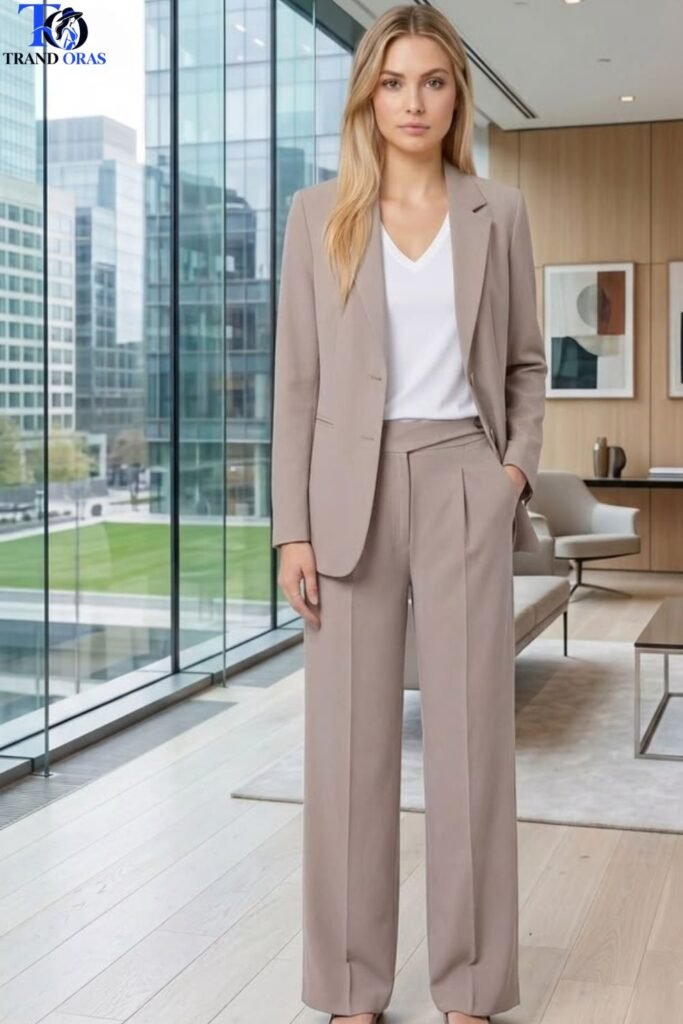
A tailored blazer paired with straight leg trousers remains one of the most dependable winter office outfits, offering a clean, structured silhouette that reads as professional across nearly any corporate dress code. The blazer provides a light additional layer of warmth over whatever’s worn underneath, while the straight trouser maintains a polished, streamlined line throughout the day.
This combination works particularly well because both pieces share a similar formality level, avoiding the mismatch that can occur when a highly tailored blazer is paired with overly casual bottoms. Choosing wool or a wool blend fabric for both pieces specifically adds genuine warmth without sacrificing the tailored, professional appearance this combination depends on.
A helpful example: someone wearing a wool blazer and trouser set finds meaningfully more warmth throughout the workday than the same silhouette executed in lighter cotton, since wool naturally retains heat more effectively while still maintaining a crisp, professional appearance appropriate for winter office outfits specifically.
Layering a fine knit sweater or blouse underneath the blazer, rather than a bulkier option, allows the blazer to maintain its intended shape while still providing meaningful additional warmth beneath the structured outer layer.
Sweater Dress With a Structured Blazer
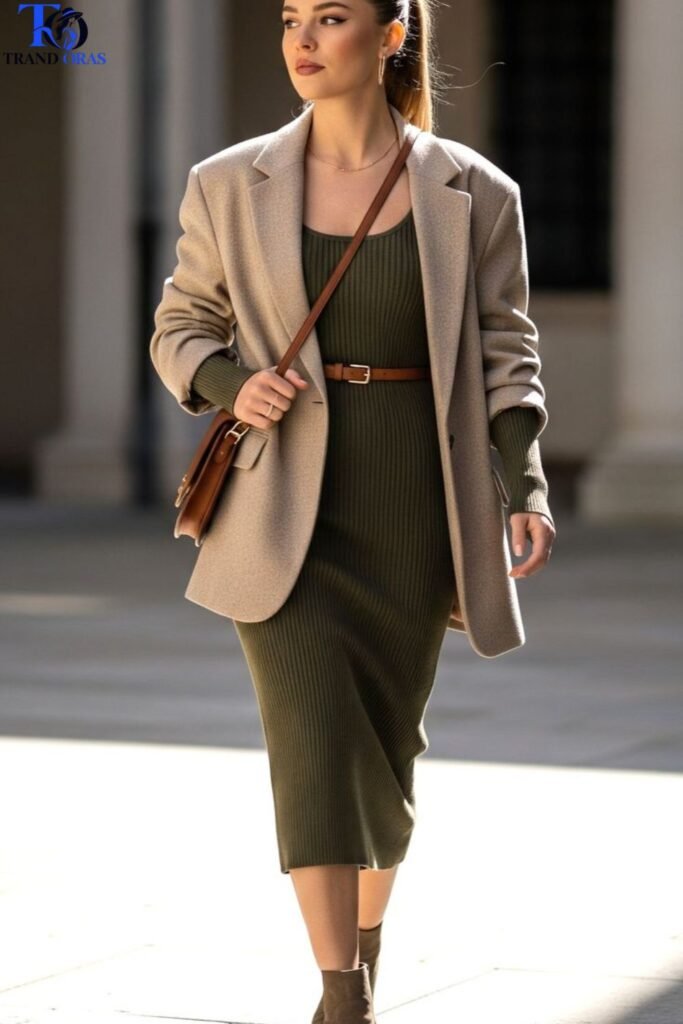
Pairing a fitted sweater dress with a structured blazer creates one of the more efficient winter office outfits, combining a single warm, comfortable base piece with the polish a blazer adds instantly. This combination works especially well for offices with a slightly more relaxed dress code, where a full suit isn’t required but genuine professionalism still matters.
This pairing benefits from choosing a sweater dress with some structure, rather than an overly loose, oversized fit, since the blazer layered on top works best with a base piece that maintains a defined silhouette underneath rather than adding bulk to an already voluminous dress.
A helpful example: someone pairing an oversized, shapeless sweater dress with a fitted blazer often finds the overall silhouette looks unbalanced, since the blazer’s structure fights against the dress’s excessive volume underneath. Choosing a more fitted or moderately relaxed sweater dress instead allows the blazer to layer cleanly, creating a considerably more polished result among winter office outfits built around this particular combination.
Adding tights and knee high or ankle boots completes this outfit practically, providing additional warmth for the legs that a dress alone wouldn’t offer during colder months.
Turtleneck With a Tailored Pencil Skirt
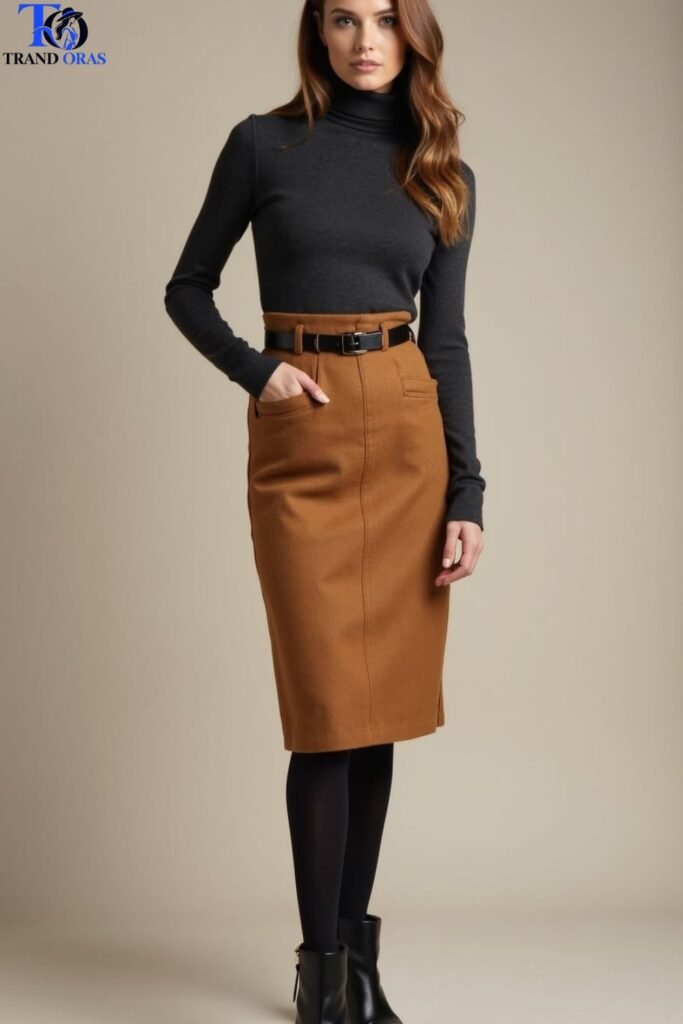
A fitted turtleneck paired with a tailored pencil skirt brings classic, sophisticated structure to winter office outfits, offering genuine warmth through the turtleneck’s high coverage while the pencil skirt maintains a clean, professional line. This combination has remained a reliable formal office staple precisely because both elements individually read as inherently polished.
This particular pairing works well because the turtleneck’s fitted silhouette echoes the pencil skirt’s similarly streamlined shape, creating a cohesive, intentional overall line rather than mismatched proportions between top and bottom. Choosing a turtleneck in a complementary or matching tone to the skirt reinforces this cohesive quality further.
A helpful example: someone new to corporate dressing might default to a looser, boxier top with a pencil skirt, not realizing the fitted turtleneck actually creates a considerably more polished, intentional silhouette specifically suited to this particular skirt shape. This pairing consideration is a detail worth understanding when building winter office outfits around more formal, tailored pieces specifically.
Tucking the turtleneck fully into the skirt, rather than leaving it loose, maintains the defined waistline this combination depends on for its polished, professional appearance.
Wide Leg Trousers With a Fitted Top
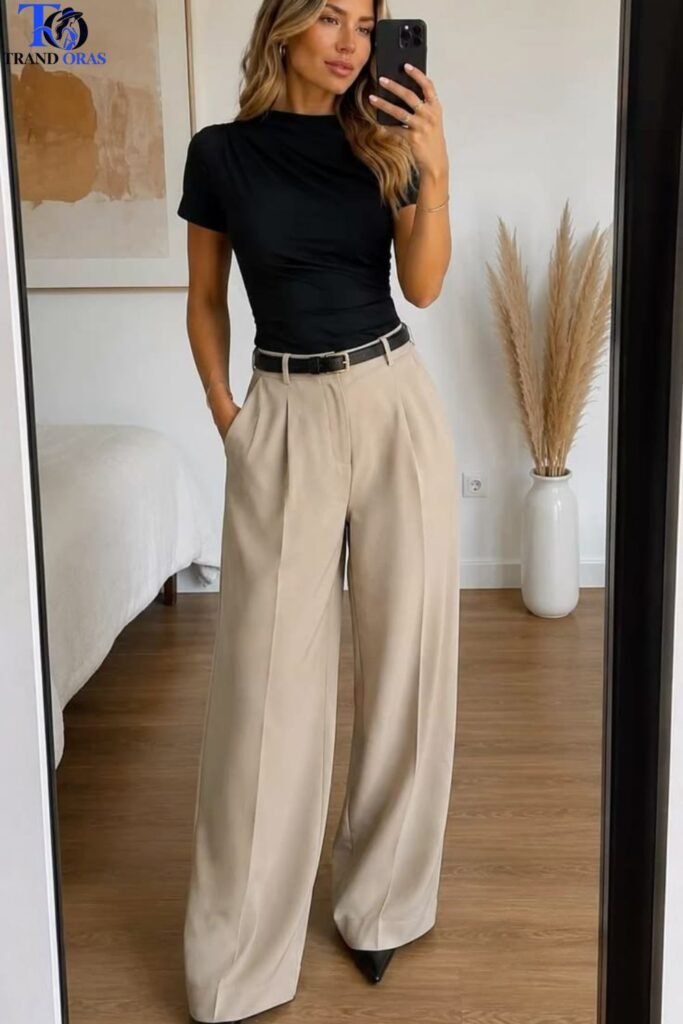
Wide leg trousers paired with a fitted top bring a contemporary, comfortable silhouette to winter office outfits, offering a relaxed alternative to more traditional straight leg or pencil styles while still maintaining genuine professional polish. This combination has grown significantly in popularity as workplace dress codes have generally relaxed in recent years.
This particular pairing benefits from the contrast between the trouser’s volume and the top’s more fitted structure, since pairing wide leg trousers with an equally loose top can quickly shift the overall silhouette from intentionally relaxed to simply shapeless. A fitted turtleneck or tucked in blouse provides the structural counterbalance this combination needs.
A helpful example: someone pairing wide leg trousers with an oversized sweater might find the overall proportion feels imbalanced and overly voluminous throughout, while the same trousers paired with a fitted top creates a considerably more polished, intentional silhouette among winter office outfits built around this particular combination.
Choosing wide leg trousers in a substantial wool or wool blend fabric specifically adds genuine winter warmth while maintaining the sophisticated drape this particular trouser silhouette depends on for its polished appearance.
Cardigan Layered Over a Silk Blouse
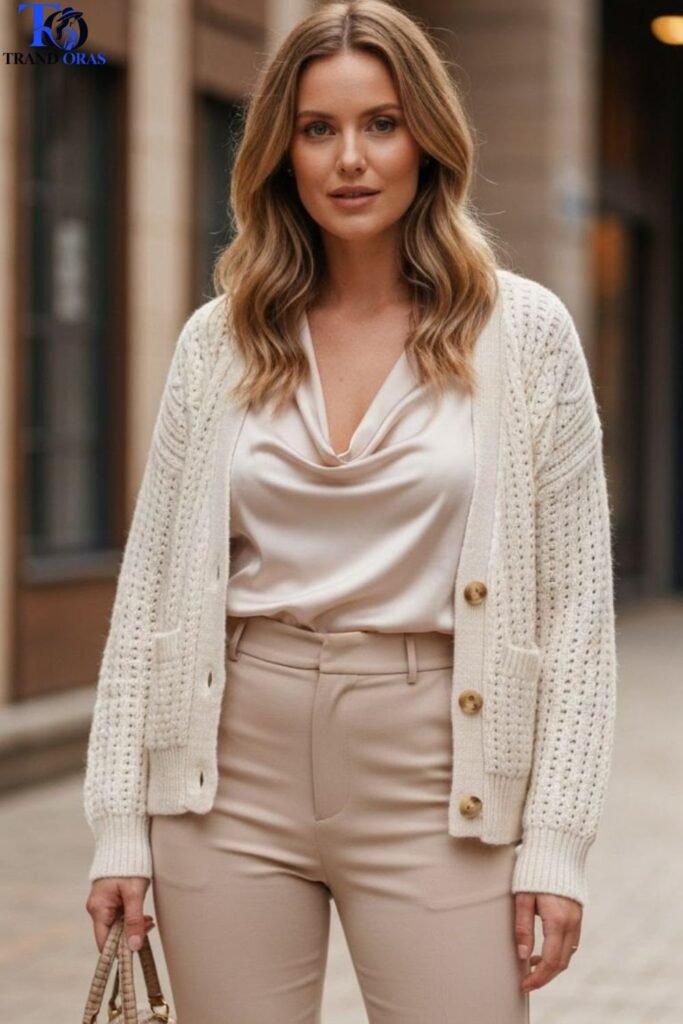
A long cardigan layered over a silk blouse creates a genuinely versatile winter office outfit, combining the cardigan’s cozy warmth with the blouse’s inherently polished, professional quality underneath. This combination offers practical flexibility throughout the workday, since the cardigan can be removed if the office runs warm while the blouse alone still maintains appropriate professional coverage.
This particular pairing benefits from choosing a cardigan with some structure or a defined silhouette, rather than an overly loose, shapeless style, since a more considered cardigan shape helps maintain the overall outfit’s professional polish rather than reading as purely casual loungewear layered over office basics.
A helpful example: someone working in an office with genuinely variable temperature throughout the day often finds cardigan layering solves this practical challenge more effectively than a single fixed warmth outfit, since the cardigan provides an easy, professional appropriate way to adjust warmth without leaving the desk. This flexibility makes cardigan layering particularly practical among winter office outfits for offices with inconsistent heating or air conditioning.
Choosing a cardigan in a neutral tone that complements the blouse underneath helps maintain a cohesive, intentional overall color palette throughout this particular combination.
Sheath Dress With Opaque Tights and a Blazer
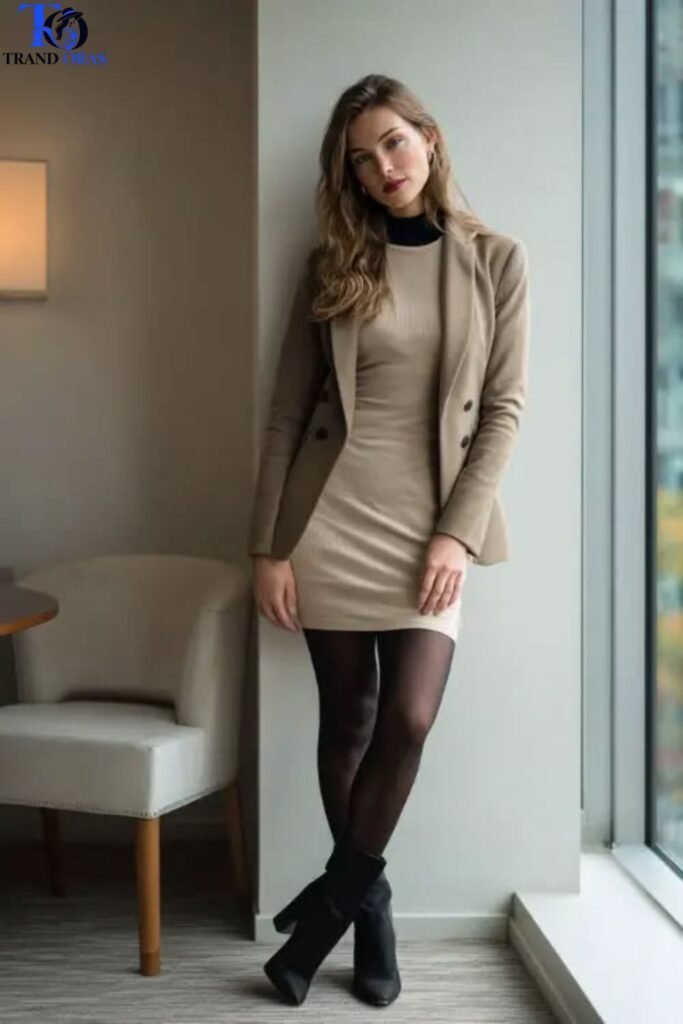
A sheath dress paired with opaque tights and a blazer creates a polished, formal winter office outfit well suited to client facing roles or more traditional corporate environments. This combination maintains the sheath dress’s clean, professional silhouette while the tights and blazer add both meaningful warmth and additional coverage appropriate for colder months specifically.
Choosing tights in a weight genuinely suited to the actual office temperature and your personal comfort matters considerably here, since sheer tights offer minimal additional warmth while heavier, opaque tights provide genuine insulation without sacrificing the outfit’s overall polished appearance.
A helpful example: someone wearing a sheath dress with only sheer, lightweight tights during genuinely cold winter months often finds themselves uncomfortably cold despite the outfit’s otherwise professional appropriateness. Switching to substantial, opaque tights specifically addresses this practical gap among winter office outfits built around dress based silhouettes.
Adding closed toe pumps or ankle boots, rather than open toe options clearly better suited to warmer months, completes this combination’s seasonal appropriateness while maintaining its professional, polished overall quality.
Matching Knit Co-ord Set
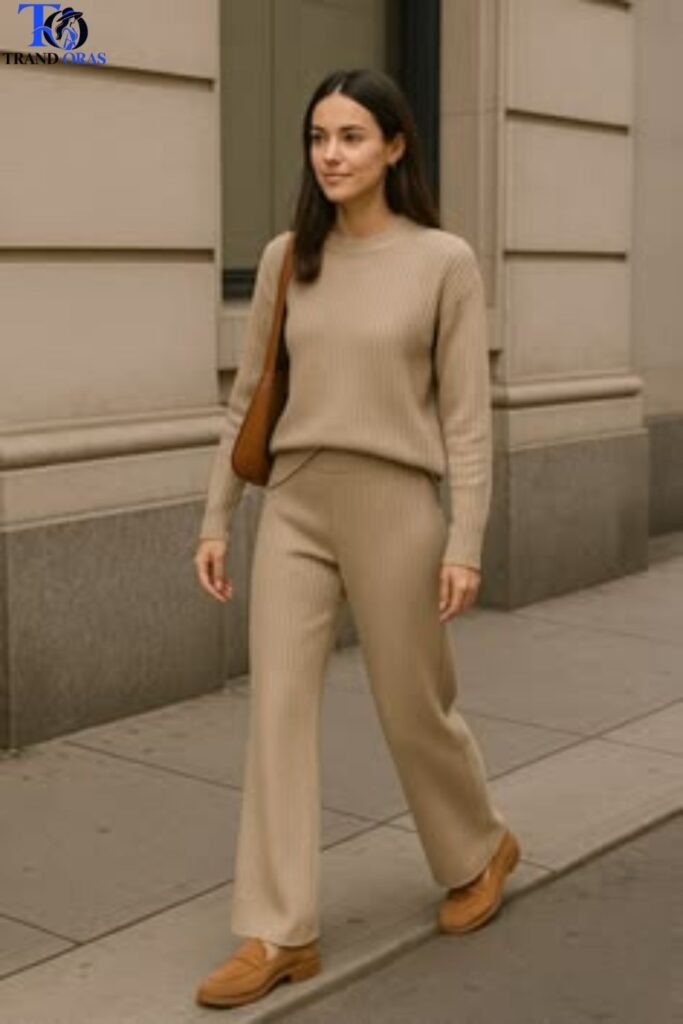
A matching knit set, a coordinating sweater and skirt or trouser in the same fabric and color, offers one of the more effortlessly polished winter office outfits, requiring minimal additional styling decisions while still reading as intentionally put together. This particular category has grown significantly in popularity as coordinated sets have gained broader acceptance across professional settings.
This combination works well because the matching fabric and color eliminate the need to coordinate separate pieces, while a well chosen knit fabric adds genuine warmth appropriate for colder months without sacrificing the outfit’s overall professional appearance and polish.
A helpful example: someone with limited time for elaborate outfit planning often finds coordinated knit sets offer a genuinely low effort way to look put together for the office, since the matching set essentially makes styling decisions for them while still providing meaningful winter warmth. This accessibility makes knit co-ords popular among winter office outfits for busy professional schedules specifically.
Layering a structured coat over this combination for the commute maintains the set’s cohesive look while adding necessary warmth and weather protection beyond what the knit alone provides.
Structured Trench Coat Over Office Basics
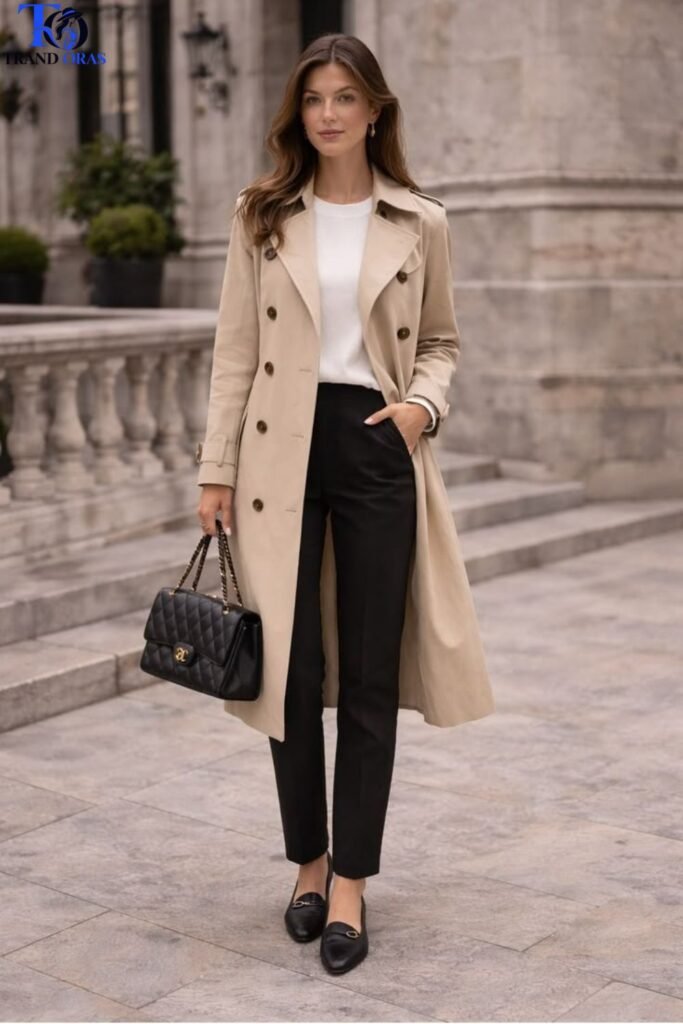
A structured trench coat worn over simple, well fitted office basics offers one of the more versatile winter office outfits, relying on the coat’s inherent tailoring to elevate even fairly straightforward pieces underneath. This particular coat style proves especially practical for transitional winter weather, working well layered over a sweater during colder days or nearly alone during milder winter stretches.
This combination benefits from the trench’s mid weight fabric specifically, which provides meaningful warmth without the bulk a heavier winter coat might introduce, making it particularly practical for offices with limited coat storage where a slimmer, more manageable outer layer proves genuinely useful.
A helpful example: someone wearing simple trousers and a basic sweater underneath a well tailored trench coat often finds the overall outfit reads as considerably more polished than the same base pieces would without the structured coat layered on top. This demonstrates how a single well chosen outerwear piece can meaningfully elevate winter office outfits built around otherwise simple foundations.
Belting the trench coat, rather than leaving it open or loosely closed, creates a more defined silhouette and adds a deliberate, finished quality appropriate for professional settings specifically.
Monochrome Neutral Office Look
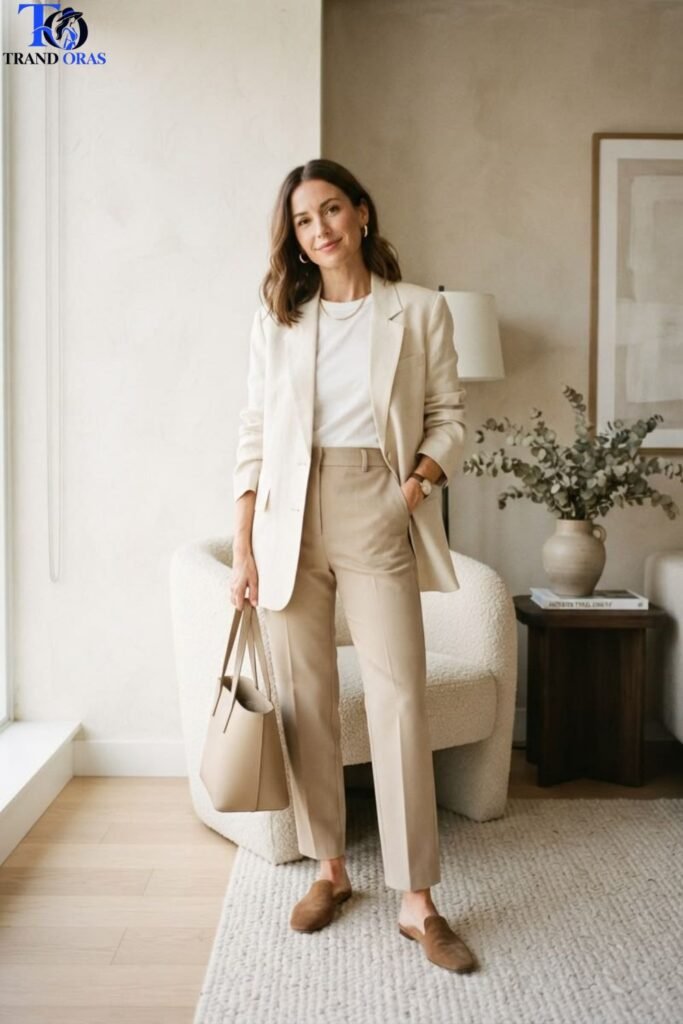
Building a winter office outfit entirely within a single neutral color family, like varying shades of camel, gray, or navy, creates one of the more visually elongating, sophisticated approaches to professional cold weather dressing. This technique works by eliminating harsh color breaks between pieces, creating a continuous, cohesive line that reads as deliberate and polished.
This approach proves particularly practical for winter office outfits specifically, since layering multiple pieces in the same tonal family allows for genuine warmth without the visual bulk that mixing several distinct colors and patterns can sometimes create in an already layer heavy winter outfit.
A helpful example: someone building a monochrome office look in shades of gray might combine a charcoal blazer, a slightly lighter gray sweater, and mid gray trousers, creating subtle tonal variation within the same overall color family rather than one completely flat, single shade throughout. This variation keeps the outfit visually interesting while maintaining the elongating effect monochrome dressing provides among winter office outfits.
Texture becomes particularly important in monochrome office outfits specifically, since varying fabric textures, like a smooth wool blazer over a slightly textured knit, adds visual interest that color alone can’t provide when everything shares the same basic tone.
Vest Layered Over a Button Up Shirt
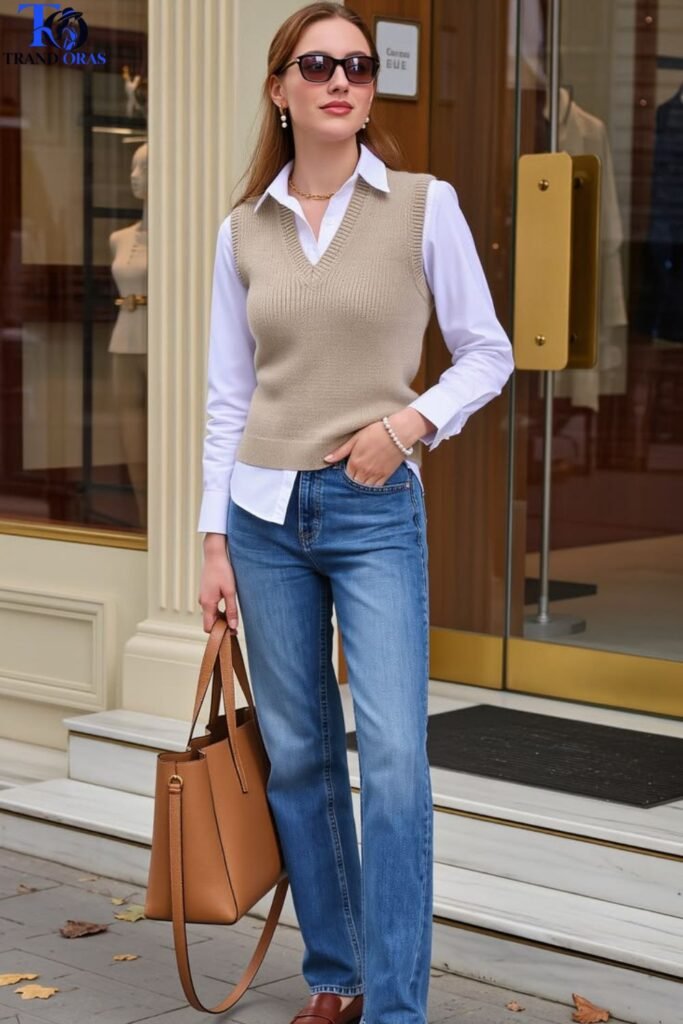
Layering a fitted or slightly structured vest over a button up shirt has become an increasingly popular winter office outfit, offering genuine styling versatility since vests work across nearly any professional base outfit while adding a layer of visual interest and warmth. This particular combination has grown in popularity for its relative simplicity and easy adaptability across different office settings.
This layering technique works especially well because the vest’s lack of sleeves creates visual interest through the contrast between the vest’s structure and the button up’s sleeves peeking out at the arms, a detail that reads as intentionally layered and professional rather than simply an incomplete outfit.
A helpful example: someone wanting to add visual interest to a fairly standard button up and trouser combination often finds a well chosen vest transforms the outfit into something that feels considerably more current and put together, without requiring an entirely new wardrobe approach. This accessibility makes vest layering practical among winter office outfits for those wanting subtle style updates.
Choosing a vest in either wool or a structured quilted fabric offers different variations on this same basic layering concept, allowing for genuine versatility across different office formality levels and personal style preferences.
Adapting Winter Office Outfits by Dress Code
Dress code plays a significant role in which winter office outfits are actually appropriate, a detail generic style roundups often gloss over. Formal, traditional corporate environments generally call for structured pieces like blazers, tailored trousers, and sheath dresses, with color palettes staying largely within classic neutrals and minimal pattern.
Business casual offices generally offer more flexibility, allowing for pieces like knit sets, cardigans, and wide leg trousers, while creative or startup environments often permit even more personal expression, including bolder colors, more casual fabric choices, and less rigidly structured silhouettes throughout winter office outfits specifically.
A helpful example: someone transferring from a formal corporate environment to a more casual startup office might initially over dress out of habit, not realizing their new workplace genuinely welcomes more relaxed winter office outfits like matching knit sets or even well styled athleisure adjacent pieces. Observing and adjusting to your specific office’s actual dress code norms, rather than assuming universal formality rules, helps you dress appropriately for your particular workplace.
When uncertain about your specific office’s expectations, erring slightly more formal for the first few weeks, then adjusting based on observed norms, tends to be a safer approach than assuming maximum casualness from the outset.
Common Mistakes to Avoid With Winter Office Outfits
One of the most frequent mistakes is dressing for outdoor cold without considering how the same outfit will feel in a heated office environment, resulting in genuine discomfort from overheating throughout the workday. Planning winter office outfits around removable layers, rather than a single fixed warmth outfit, helps avoid this common issue.
Another common error involves ignoring your specific office’s dress code norms in favor of generic winter styling advice, leading to outfits that feel either underdressed or overdressed relative to your actual workplace culture. Observing your office’s actual dress code, rather than assuming universal rules, produces more consistently appropriate results.
Choosing purely decorative, insufficiently warm pieces for the commute itself is another frequently repeated mistake, since a genuinely cold walk or wait for public transportation can undermine an otherwise well planned outfit if outerwear doesn’t provide adequate protection. Prioritizing a substantial, weather appropriate coat for the commute specifically helps address this practical gap.
Finally, neglecting coat storage practicality is a mistake worth avoiding, since bulky, difficult to store outerwear becomes a genuine daily hassle in offices with limited storage space. Choosing outerwear that can be easily hung or folded for the day helps winter office outfits remain practical beyond just the commute itself.
The Future of Winter Office Outfits
Winter office outfits continue to evolve alongside broader shifts toward hybrid work schedules, with many professionals now needing wardrobes that work for both in office days and video calls from home, sometimes within the same week. This shift has pushed more workplace dress codes toward comfort conscious professionalism rather than rigid traditional formality.
There’s also a growing emphasis on climate adaptive fabric technology within professional clothing specifically, with more brands developing pieces designed to transition comfortably between cold commutes and warmer indoor office environments, addressing the specific temperature variable challenge winter office outfits present.
Sustainability considerations are shaping this space as well, with more professionals prioritizing versatile, durable pieces designed to work across multiple outfit combinations and office settings, rather than accumulating numerous single purpose winter office outfits with limited overall wearability.
Looking ahead, personalized styling tools, including AI based outfit planning technology that accounts for actual office temperature, commute conditions, and specific dress code norms, are beginning to help professionals build winter office outfits genuinely suited to their real workplace environment rather than generic seasonal styling advice.
Conclusion
Winter office outfits work best when built around smart layering that accounts for both cold commutes and warmer indoor environments. From a classic blazer and trouser combination to a versatile knit co-ord set, there’s an option here suited to nearly every dress code and workplace culture. The key is prioritizing removable layers and genuine warmth alongside professional polish. Ready to update your work wardrobe Use this guide as your starting point for building winter office outfits that keep you comfortable and put together all day.
Natalie Cooper is a fashion and style writer with 6 years of experience in fashion and outfit inspiration. Through Trand Oras, she shares fresh outfit ideas, seasonal trends, and practical styling tips to help readers create stylish, confident looks for every occasion.


